You know the feeling. You've read the books, set the goals, downloaded four different habit trackers by now. You know atomic habits, you know systems over goals, you know everything except why you still skip Tuesday mornings. The problem isn't that you don't know how. The problem is that doing the thing, day after day, feels about as fun as filling out tax forms.
That's the gap we started with. Not "how to track habits" — plenty of apps do that. But how to make consistency feel less like a chore and more like something you actually want to show up for. Even pros get bored. Especially pros, maybe. When you've optimized everything, the last frontier is that weird emotional drag that comes with yet another checkbox.
So when we started building Habitly Routines, we asked ourselves a different question: what if the system itself gave you a little dopamine hit back? Not just a streak number that punishes you when it resets, but actual, small reasons to look forward to tomorrow's task.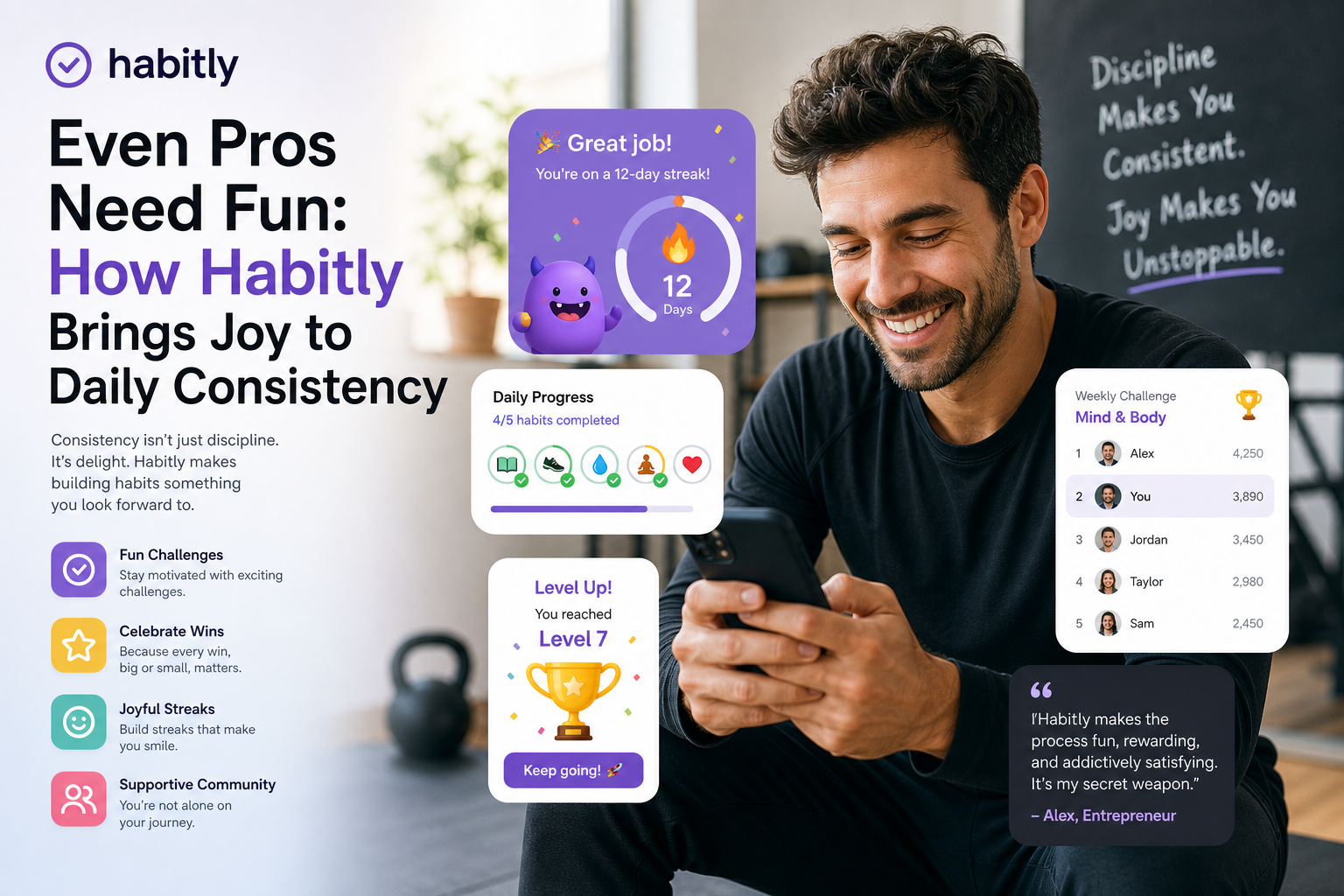
Why "fun" isn't a dirty word in habit building
I've been in this space long enough to know that serious habit apps look down on fun. Fun is seen as a distraction, a gamification trick that wears off after week two. And honestly, that criticism is fair if all you do is add badges and call it a day.
But here's what we observed in our own messy attempts at consistency: the days I actually wanted to do my habit weren't the days I felt disciplined. They were the days I got a tiny, unexpected sense of reward. Maybe it was the visual of a streak chain looking satisfying. Maybe it was a random "nice" message. Maybe it was just the act of checking in that felt frictionless instead of heavy.
Habitly doesn't try to make everything fun. Some habits are just work, and that's fine. But we do try to make the interface with your habit feel lighter. Less like a ledger, more like a rhythm you want to keep playing.
Three small things that changed how I used it
I'll give you concrete examples, because vague praise is useless.
One: the streak doesn't punish you as hard. Most apps treat a missed day like a crime. Habitly gives you a grace skip, and the visual feedback is more "you're still close to your goal" than "you failed." That tiny distinction actually made me more likely to come back instead of abandoning the whole system after one bad week.
Two: the check-in feels like a tap, not a task. We spent a lot of time reducing friction. Sounds small, but when checking a habit takes less than a second and you get a subtle animation that feels nice, you do it more often. Human nature isn't complicated — we repeat things that feel pleasant.
Three: you can set "low pressure" modes per habit. Not every habit needs intensity. I have a habit for "review notes" that I set to lenient — even skimming for two minutes counts. That flexibility removed the all-or-nothing mindset that kills consistency for perfectionists.
The honest trade-offs
I won't pretend Habitly is a magic bullet. If you're someone who hates any kind of tracking, no amount of fun animations will change that. Some people genuinely prefer a blank notebook and raw willpower. That's not our audience, and I respect it.
Also, the "fun" elements work best for habits where the goal is frequency rather than depth. For deep work sessions or complex projects, you might prefer a tool that's more structured, less playful. Habitly leans into daily consistency, not project management.
And yes — if you over-optimize the gamification, you can fall into the trap of chasing virtual rewards instead of real progress. We've tried to keep the game elements subtle enough that they fade into the background once the habit sticks. But that balance is tricky, and we're still tuning it.
Who should actually use this
If you've tried strict habit trackers and felt like they drained your motivation rather than built it, Habitly is worth a shot. Especially if you're someone who responds well to visual progress and low-stakes check-ins. It's also good for people who maintain multiple habits at once — the system is built to handle variety without feeling cluttered.
On the other hand, if you want a rigorous, metrics-heavy tracker with deep analytics, this probably isn't it. And if you dislike any form of digital nudge, stick to paper.
We built Habitly because we got tired of apps that treated consistency like a punishment. We wanted something that made you look forward to tomorrow, even if just a little. It's not revolutionary — it's just a better fit for people who need a gentle system, not a drill sergeant.
Comments
Leave a Comment