Most habit trackers fail you long before you fail them. You download one, add twenty habits on day one, feel great for three days, and then ignore the red notifications until you eventually delete the app. The problem isn't your discipline; it's that a scattered checklist doesn't build a routine. That's the gap Habitly tries to fill, shifting the focus from isolated checkboxes to actual daily systems.
Building Routines Instead of Just Tracking Them
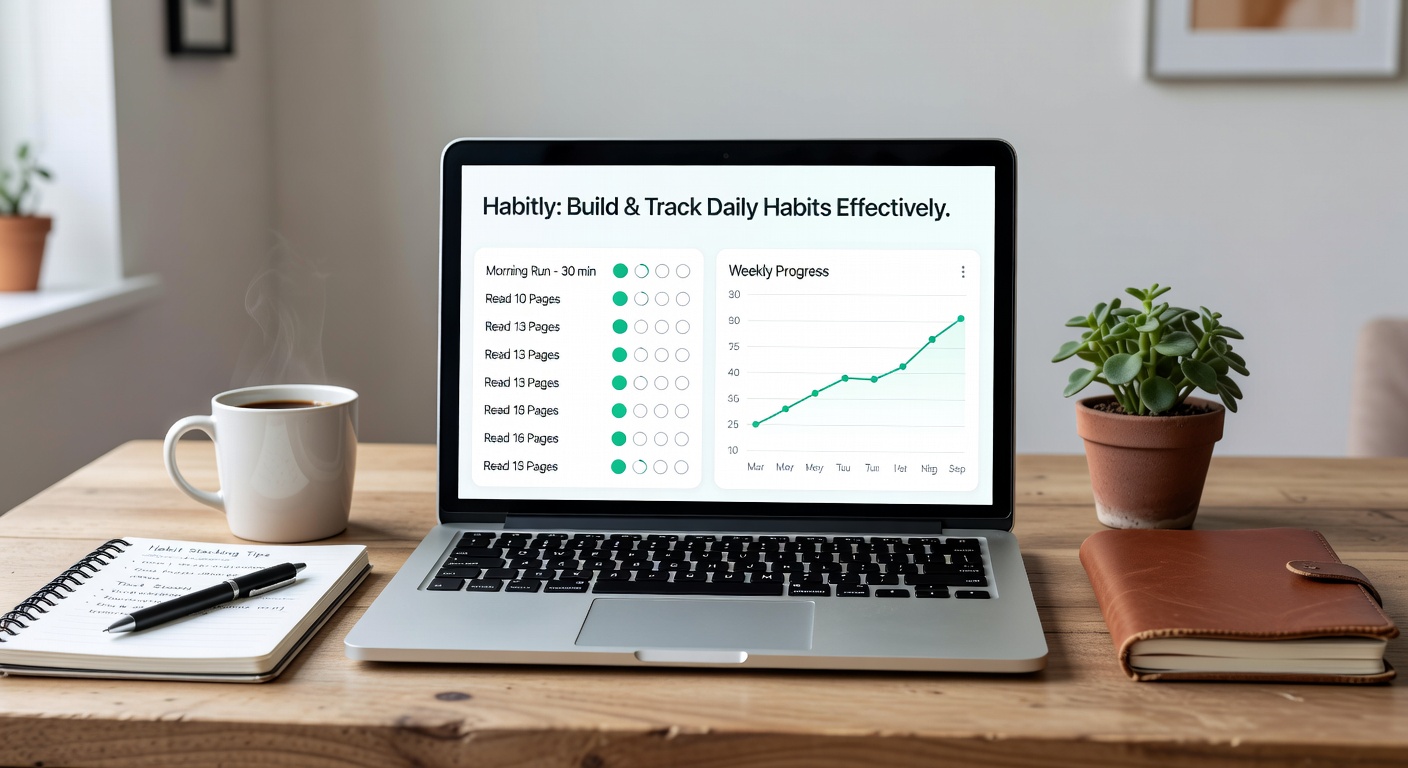
Habit trackers usually treat "drink water" and "read 20 pages" as separate, disconnected events. Habitly groups them into routines. If you're trying to fix your mornings, you don't just tick off individual tasks—you run through a "Morning Start" block. This changes how you approach the app. Instead of hunting for scattered habits in a long list, you just start the routine, and the app cues you through the sequence. It’s less like a to-do list and more like a playlist for your day.
Take a common scenario: the post-work slump. You want to exercise, cook a decent meal, and read instead of doom-scrolling on the couch. In a standard tracker, you have to remember each habit independently while you're already tired. In Habitly, you trigger your "Evening Wind-Down" routine, and the app prompts them in order. For study blocks, you can set up a "Deep Focus" routine that strings together a short meditation, turning off phone distractions, and a timed work sprint. The sequence matters more than the individual parts, because execution becomes automatic.
Streaks, Flexibility, and the Motivation Trap
Habitly leans heavily on streak tracking to keep you consistent. Seeing a long unbroken chain is undeniably satisfying, but it’s also a double-edged sword. When you miss a day and the streak resets to zero, the psychological hit often makes people quit entirely rather than starting over. Habitly tries to soften this by keeping the focus on routine completion rather than penalizing a single missed sub-habit. If you skip journaling but still meditate and stretch, the routine block still shows progress.
Still, the streak mechanic means you have to be honest with yourself about whether tracking streaks motivates you or just creates anxiety. If you're a perfectionist, any streak-based system can become a trap where you end up doing the bare minimum just to keep the number ticking up, rather than actually engaging with the habit. Habitly’s routine grouping helps offset this by giving you a broader system to fall back on, but the pressure of the unbroken chain is still there.
Is Habitly the Right Fit for You?
Before swapping your current setup, consider what actually drives your consistency. If you just need to remember to take vitamins or drink water, a basic reminder app or a free minimalist tracker like Loop Habit Tracker does the job with far less friction. If you need gamification to push through resistance, Habitica’s RPG system—where you earn gear and level up—is probably more engaging. And if you want deep Apple Health integration, the iOS app Streaks is hard to beat.
Habitly makes sense if your main struggle is structuring your time. It’s built for people who don’t just need to remember what to do, but need a system to guide when and how to do it in sequence. The tradeoff is that setting up those routines takes upfront effort. You have to actually think about the order of your day and design the blocks logically. The app only works if you commit to running the routine blocks instead of cherry-picking tasks.
It also isn't ideal for tracking highly variable or spontaneous tasks. If your daily schedule is unpredictable because of shift work or constant interruptions, rigid routine blocks might feel more frustrating than helpful. In that case, a loose checklist is actually more adaptable.
Final Take
A habit tracker is only as good as the habits you actually keep. Habitly gets that the real problem isn't forgetting to drink water—it's failing to build a cohesive morning or evening system that makes drinking water automatic. If your current app feels like a disjointed list of chores, shifting to a routine-based approach might fix the consistency gap. But if you know streaks trigger your anxiety, or you only have a couple of loose goals to hit, the routine structure might just be unnecessary overhead.
Comments
Leave a Comment