We all know the cycle. You download a habit tracker, log three perfect days, miss the fourth because life gets chaotic, watch the streak snap, and quietly abandon the app by day six. The whole point of these tools is consistency, yet most of them just hand you a digital gold star and a guilt trip when you fail. Habitly enters this crowded space with a specific pitch: it wants to help you keep your streak alive and build better routines. But does the streak mechanic actually survive contact with a messy schedule?
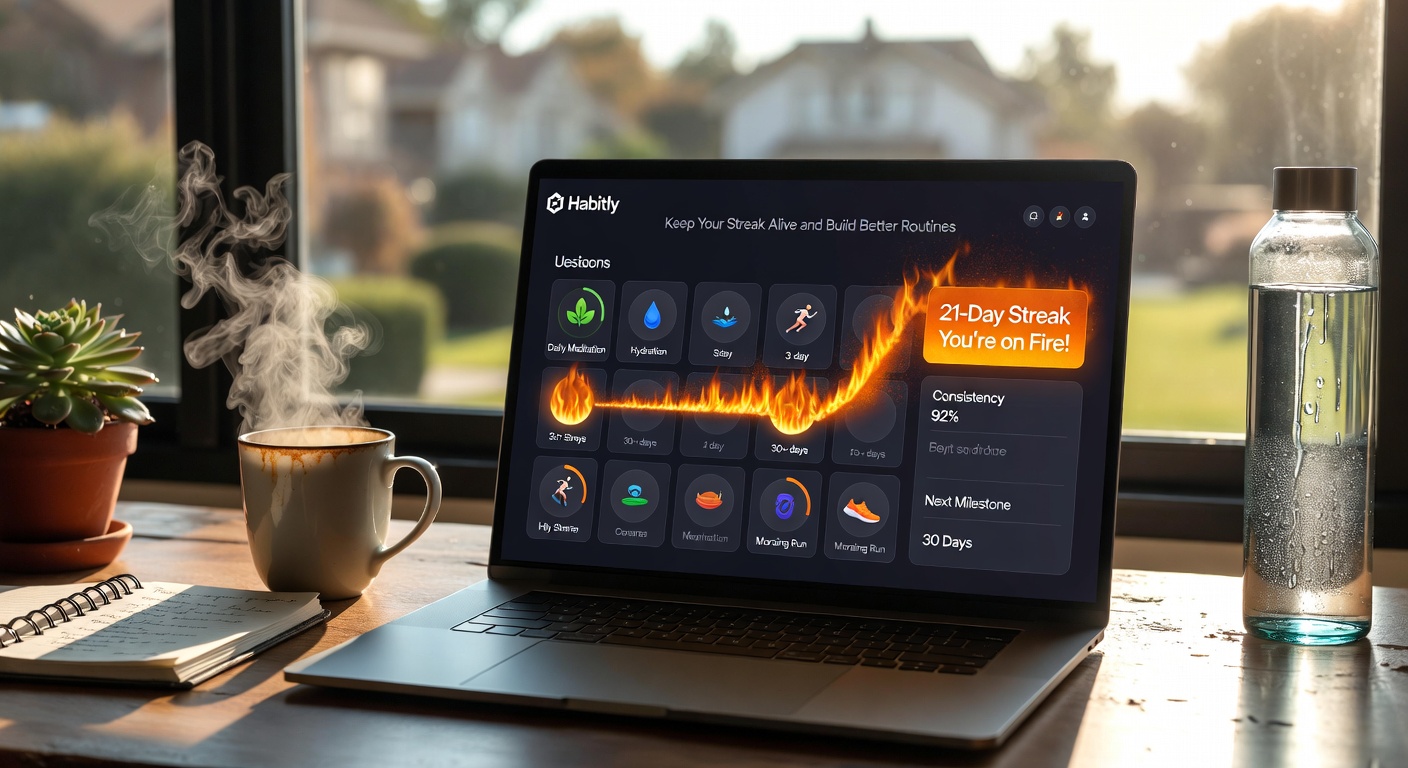
Routines Over Random Checklists
The biggest shift in Habitly is how it frames your day. Instead of throwing twenty isolated habits onto a dashboard—drink water, read ten pages, stretch, meditate—it groups them into routines. A morning routine isn't just a tag; it's a sequence you execute in order. When you sit down to study, you trigger your "focus block" routine, which might include turning on a timer, closing distracting tabs, and reviewing yesterday's notes before starting deep work.
This grouping changes the psychology. You aren't hunting for scattered checkboxes throughout the day. You complete a block, and the app registers the entire routine as done. It feels less like micromanaging your life and more like running an actual system. For health or study habits that naturally cluster together, this structure makes the daily grind feel less fragmented. You just start the routine, and the app guides you through the steps.
The Streak: Fuel or Friction?
Habitly’s core identity is built around that streak counter. When you string together days, the visual reinforcement is immediate and satisfying. Watching a routine hit day fifteen does push you to not break the chain. It’s the classic Seinfeld strategy digitized, and for certain personalities, that visual momentum is exactly what they need to push past the initial friction of a new habit.
But the tradeoff is real. What happens on day sixteen when you get a flat tire, catch a bad cold, or simply forget because you were traveling? The streak drops to zero. Some people find this reset motivating—a clean slate to conquer. Others find it demoralizing. If a broken streak makes you want to close the app and never open it again, relying heavily on this feature might backfire. Habitly doesn't offer much grace or flexible scheduling; it just shows the numbers. You have to know your own psychology before you lean into it.
Evaluating the Fit and Alternatives
Habitly is deliberately lean. It does not give you detailed analytics, completion rate charts over the last six months, or social accountability features where friends can cheer you on. It is just you, your routines, and the streaks. This simplicity is its strength if you get distracted by too many features, but a weakness if you need data to spot your weak points.
If you want granular tracking—say, seeing exactly which days you skipped your vitamins over the last quarter—apps like Strides or Loop Habit Tracker give you those charts and flexible skipping rules. If you need gamification or community pressure to stay on track, Habitica turns your to-do list into an RPG with friends. Habitly sits in the middle: clean, quiet, and entirely dependent on your internal drive to not break a visual chain.
Final Take
Habitly does exactly what it claims. It tracks routines and keeps streaks visible. It won't force you out of bed or lock your social media apps; the actual behavior change is still on you. However, the routine grouping makes daily execution feel less like a scattered chore list, which is a genuine usability win. If streaks drive your motivation and you just need a straightforward interface to lock in your morning or study blocks, Habitly does the job well. If a missed day sends you into a spiral of guilt, the rigid streak counter will probably do more harm than good.
Comments
Leave a Comment