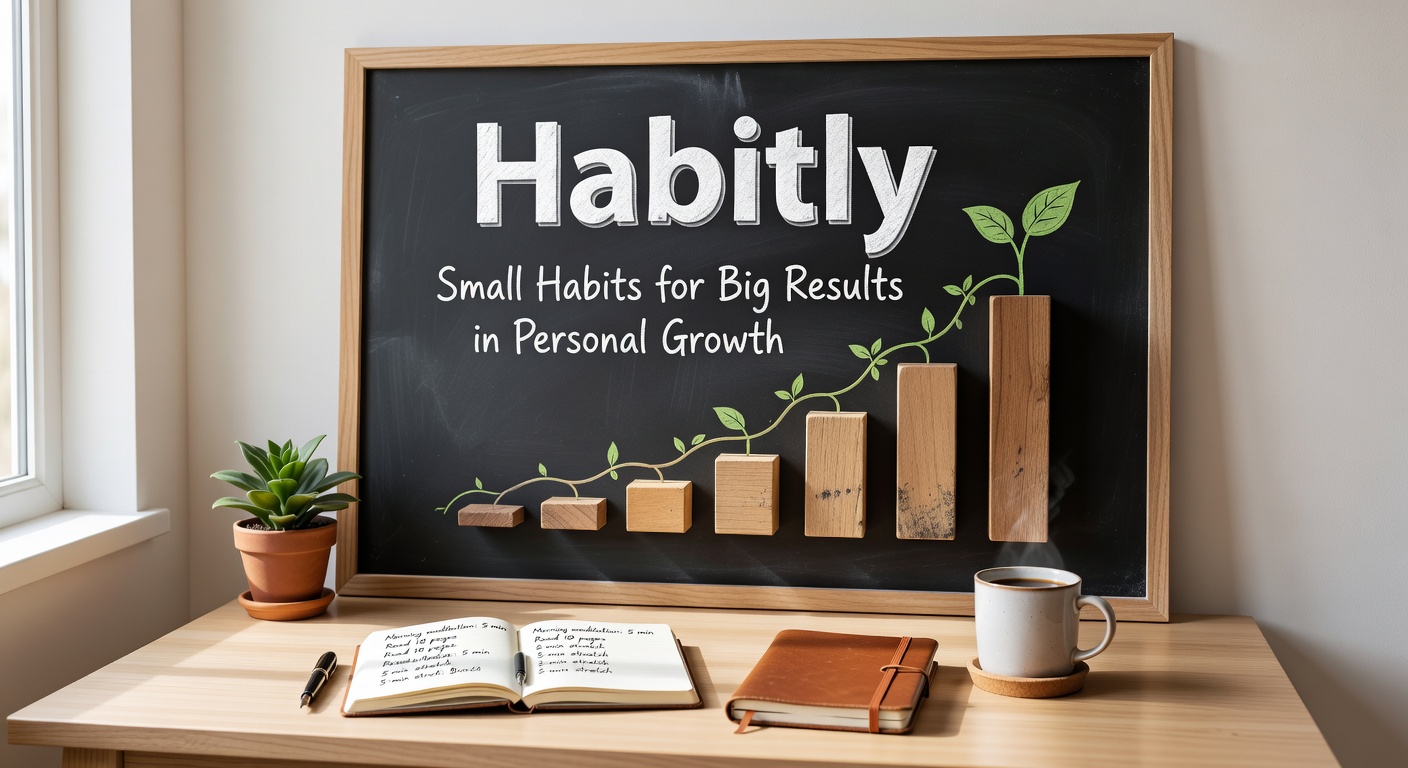
Most habit trackers fail you right around day four. You download something, load it up with grand ambitions—meditate 30 minutes, read 50 pages, run 5 miles—and the sheer weight of the list makes you swipe the notification away by the end of the week. The real problem isn't a lack of willpower; it's trying to overhaul your life in one go. Habitly takes a different angle, banking on the idea of small habits for big results, focusing on building actual routines rather than just dumping a disconnected to-do list on your screen.
How Habitly Delivers Small Habits for Big Results
A lot of apps treat habits like isolated tasks. You check off "drink water" and move on. Habitly groups them into routines, which changes how you interact with the app daily. Instead of hunting for scattered tasks, you trigger a block—like a "Morning Wake-Up" sequence that strings together drinking a glass of water, doing a 2-minute stretch, and reviewing your top priority for the day. Or an "Evening Wind-Down" that cues you to turn off screens, read a few pages, and set your alarm.
This grouping forces a specific kind of consistency. You're not just trying to hit a streak on a single habit; you're trying to nail the whole block. If you skip the stretch but drink the water, the routine stays incomplete. It’s a subtle shift, but it mirrors how real life works. You don't usually decide to stretch in isolation; you decide to start your morning routine, and stretching is just part of the conveyor belt.
The Streak Psychology and Its Tradeoffs
Habitly leans heavily on streak tracking to keep you locked in. Seeing a continuous chain of days does provide that small dopamine hit to keep you going, especially when the habits are intentionally tiny. But streaks have a well-known dark side. Missing one day feels like breaking a priceless vase. Once the streak is zeroed out, the motivation to restart often drops off a cliff.
The app doesn’t offer much forgiveness here. There’s no "streak freeze" or easy way to log a half-done day without breaking the chain. If you’re the type of person who gets demoralized by a broken streak and abandons the app entirely, this rigid approach might backfire. On the flip side, if you need that strict, no-excuses accountability to get a new behavior off the ground, the uncompromising nature of the streak counter is exactly what keeps you honest.
Is This the Right System for You?
Habitly works best for someone trying to establish foundational behaviors from scratch—like getting a basic health or study rhythm going—where the habits are small enough to be almost effortless. If your goal is to just remember to take vitamins and floss, the routine structure might feel like overkill. A simple reminders app would do the job with less setup friction.
It also isn't built for deep analytics. If you want to track how your sleep duration correlates with your morning meditation consistency, or if you need complex variable tracking (like measuring actual reps and sets at the gym), you’ll hit a wall. Apps like Habitica gamify the experience more for people who need a quest system, and Strides offer better chart-heavy tracking for data nerds. Habitly stays deliberately narrow: it wants you to define the system, run the system, and not overthink the data.
The premise of Habitly—small habits for big results—only holds up if you actually keep the habits small. The app gives you the scaffolding to string those tiny actions into a cohesive routine and the streak counter to force daily repetition. It won't do the work for you, and its rigid streak mechanic can be a dealbreaker for perfectionists who quit after one slip. But if you’ve been stuck in the cycle of overcommitting and abandoning your trackers, forcing yourself to define a minimalist routine here might be the exact constraint you need to finally get out of your own way.
Comments
Leave a Comment