I’d tried every habit app under the sun. Streaks, reminders, widgets—you name it. And every time, I’d last maybe two weeks before the enthusiasm fizzled. The problem wasn’t the app. It was me, alone, with nobody to notice whether I showed up or not.
That’s why the phrase “friends cheer me on” caught my attention with Habitly. An app that’s not just about tracking your own streaks, but about letting people you trust see your progress and nudge you when you stall. I’ve been testing it for the past month, and the social layer makes a real difference—though not in the way I expected.
How the friend feature actually works
In Habitly, you can add friends by username or link. Once connected, you see their active habits and streaks—only the ones they choose to share. You can send a quick “keep going” reaction or a short message. No leaderboards, no public competition. It’s closer to a gentle accountability partner than a gamified race.
I set up three habits: morning walk, 20 minutes of Japanese study, and no phone after 11pm. I linked my wife and a friend from work. The first week, I got three “👍” from my wife for the walk habit, and my friend sent a “did you do it?” message on day four when my study streak was still alive. That tiny external pressure was enough to keep me from shrugging off a lazy evening.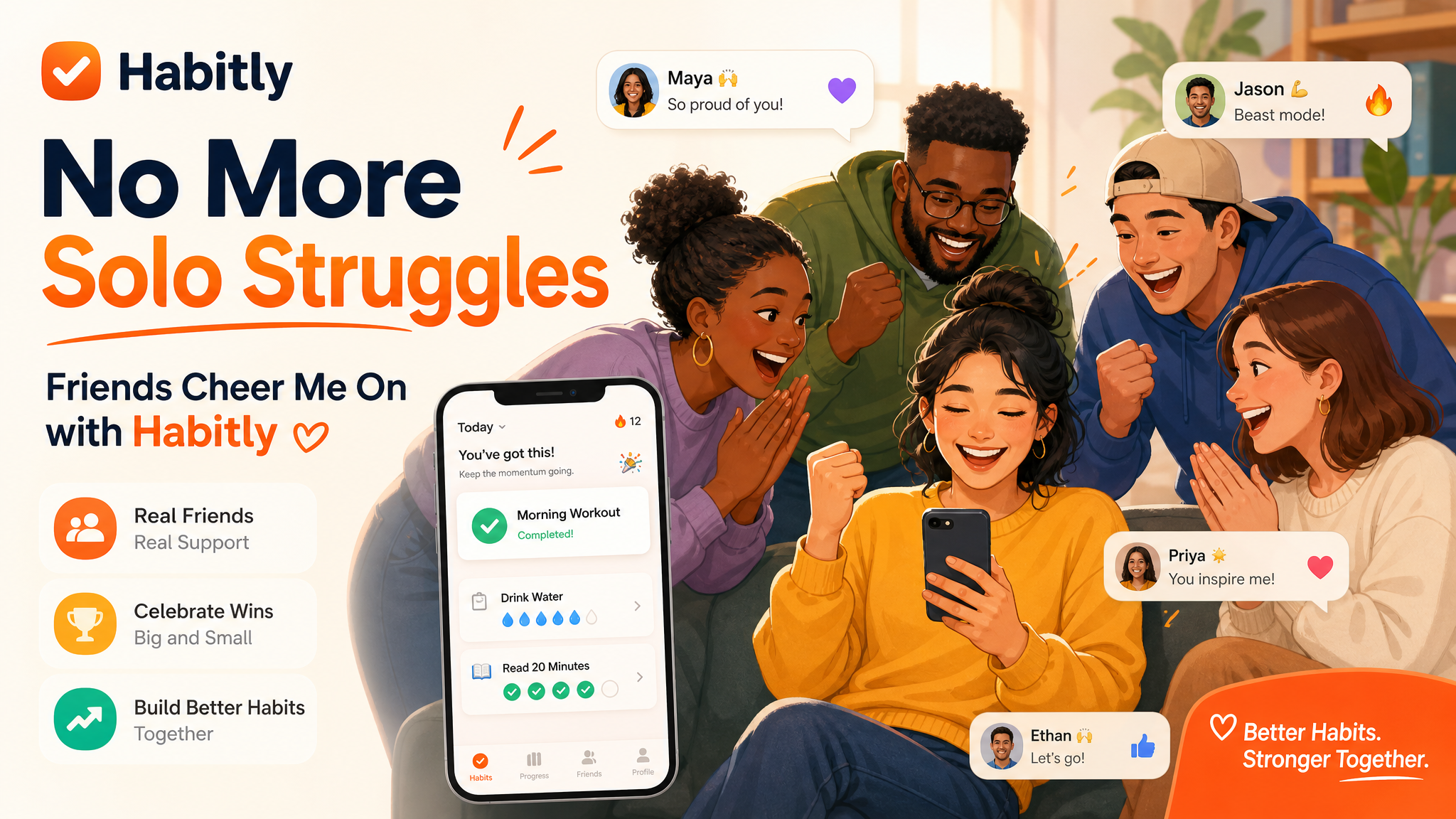
Real scenarios where it clicked
Scenario 1: The study streak that almost broke. Day twelve of Japanese. I was tired and had already convinced myself to skip. Then my friend’s reaction popped up: a simple “you’re on fire.” I couldn’t face logging a miss after that. So I did 10 minutes instead of 20—the habit was still marked done. Habitly’s flexibility here matters: it logs completion, not duration length. Perfect for those “half-ass it but don’t break the chain” days.
Scenario 2: Rebuilding the workout habit after travel. I travel for work and my routine always collapses. After a three-day gap, my wife saw the streak was broken and left a note: “you got this, restart today.” That single message did more than any motivational quote. Knowing someone else was watching my timeline made me restart faster than I ever would alone.
Scenario 3: The group challenge gone gentle. I roped two other friends into a shared “read 10 pages daily” habit. None of us had done this before. The first week, we all kept up. The second week, one friend missed two days and said he felt bad. We didn’t pressure him, just sent a thumbs-up when he resumed. Habitly’s social feature feels designed for this: low-stakes accountability, not shame.
The tradeoffs you should consider
Not everything is rosy. First, the friend system only works if your friends actually use the app. I have one close friend who never checks his notifications, so his “presence” is silent. That’s fine, but it means you need at least one active buddy. If you’re the first in your circle, you’ll start alone until you convince someone to join.
Second, privacy is a valid concern. You decide which habits to share, but the default is that they’re on. I changed mine to share only three out of six habits. That works, but it’s easy to forget you’re sharing something personal like “no phone after 11pm” and then a friend sees you failed. I recommend reviewing share settings before inviting anyone.
Third, the cheer notifications can sometimes feel like a mild distraction. If you’re sensitive to phone pings, you might want to turn off friend notifications except for specific times. Habitly allows that, but the default is reactive. I tweaked it after the first week because the “someone liked your streak” popup was breaking my focus during work.
Is this for you?
If your main blocker is motivation, not technique, then the friend feature could be exactly the missing piece. Habitly won’t magically make you consistent, but it does provide a lightweight social scaffold. It’s especially useful for habits you’ve tried to build alone and failed. The social element is closer to having a workout partner than to a public leaderboard—less pressure, more gentle accountability.
On the flip side, if you prefer total privacy or are very self-motivated, the social layer adds noise. You could still use Habitly alone and ignore the friend tab. It’s optional. But the core value comes from those small, human prompts. I’m still using it after a month, which is longer than any other habit app has held me. And I’m pretty sure it’s because my wife can now see exactly when I skip my walk.
Comments
Leave a Comment