We all know the cycle. You get motivated, download a habit tracker, fill in a beautiful grid of goals, and by day four, you're ignoring the notifications. The problem isn't usually a lack of wanting to change; it's that a wandering brain refuses to sit still long enough to let a routine cement. I recently stopped the quit-cycle by splitting the labor between two apps: Habitly for building the routine architecture, and Focusly for forcing my brain to stay in the room.
The Habitly approach to routine architecture
Most habit trackers treat your goals like a grocery list. You check off "read" or "meditate" and move on. Habitly Routines works differently because it forces you to think in systems, not isolated tasks. Instead of just telling yourself to "exercise more," you build a specific sequence: drink water, put on shoes, stretch, run. When your brain inevitably tries to negotiate its way out of a task, Habitly has already removed the decision fatigue. You just follow the script.
The streak tracking is there, but it feels secondary to the actual roadmap you've built for yourself. You aren't just maintaining an arbitrary count; you're running a sequence that physically moves you from one step to the next. That chaining effect is what makes the difference when you're tired and easily distracted.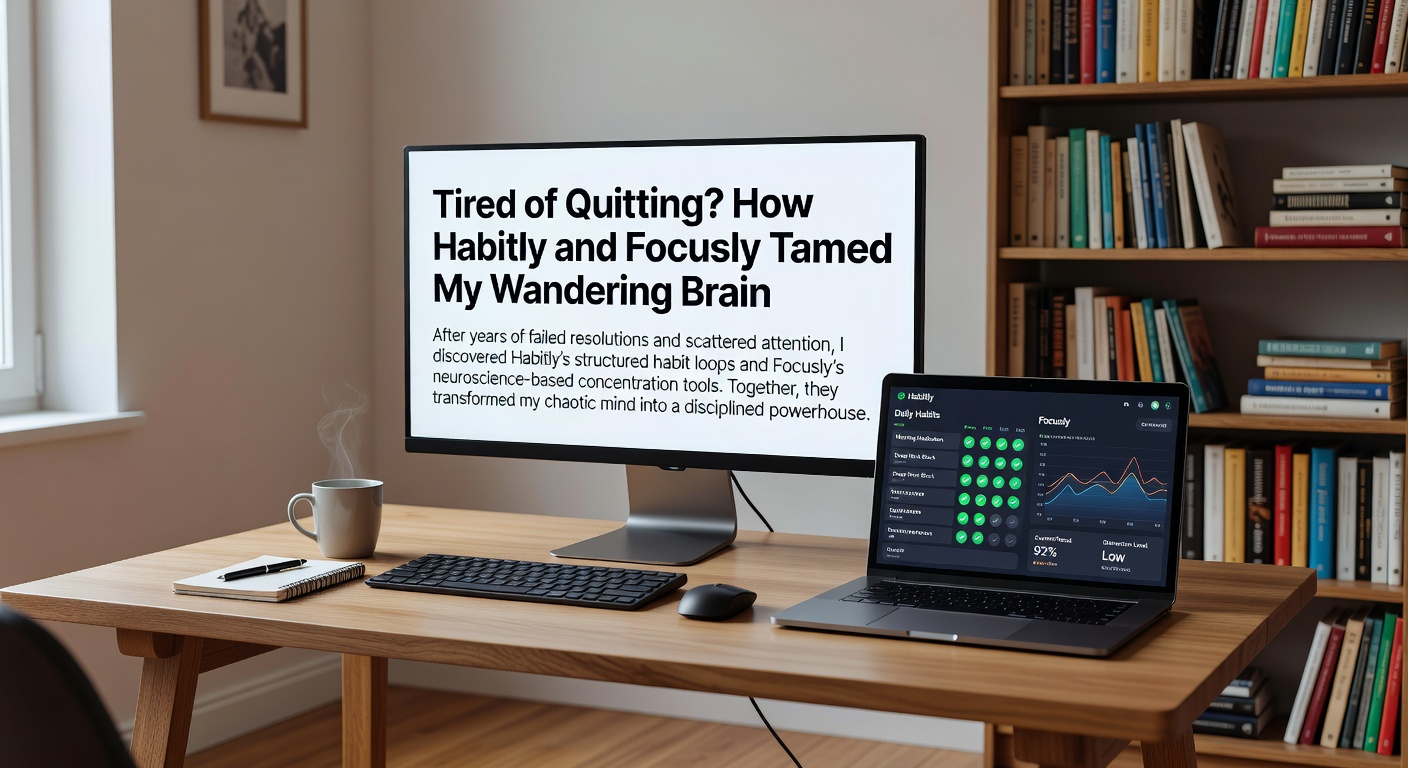
Where Focusly steps in for execution
Having a roadmap is useless if you can't stay on the road. This is where Focusly comes in. My brain will happily start a 30-minute study block, only to derail into checking emails after eight minutes. Focusly handles the in-the-moment friction. Whether it's a strict Pomodoro timer, ambient noise, or a focus challenge that blocks other apps, it creates a hard container for your attention.
Take a morning reading habit. Habitly queues up "read 20 pages" right after "make coffee," so I don't have to decide what to do next. But once I sit down with the book, Focusly runs a 20-minute focus sprint. If my mind drifts to my phone, the ticking timer is right there pulling me back. The same goes for deep work sessions. Habitly schedules the two-hour block on my routine list; Focusly chops it into 25-minute intervals so I don't burn out or wander off halfway through.
Evaluating the fit: Tradeoffs and alternatives
Running two apps to manage one brain isn't perfectly clean. You're jumping between Habitly to see your daily sequence and Focusly to run the session timer. It also means potentially paying for two subscriptions, or dealing with two separate notification systems. If you want a visually tight, all-in-one solution, apps like Structured or Routinery try to blend daily planning with timers. They look neater on a single screen, but I usually find their habit tracking too rigid or their focus tools too basic.
Habitly gives you more flexibility in how you arrange your routines, and Focusly gives you more aggressive focus enforcement. If your main struggle is simply remembering what to do next, Habitly alone might solve your problem without needing a second app. If you know exactly what to do but can't stop daydreaming once you start, Focusly is your bottleneck. But if you're stuck in the classic loop of forgetting your goals and losing focus when you do remember them, this combo covers both blind spots.
Leaving less to willpower
Stopping the habit quit-cycle usually requires admitting that willpower isn't a reliable system. By offloading the routine design to Habitly and the attention management to Focusly, you leave very little up to daily motivation. It’s a bit clunky to manage two apps for one process, but it’s far less clunky than starting over every three days.
Comments
Leave a Comment