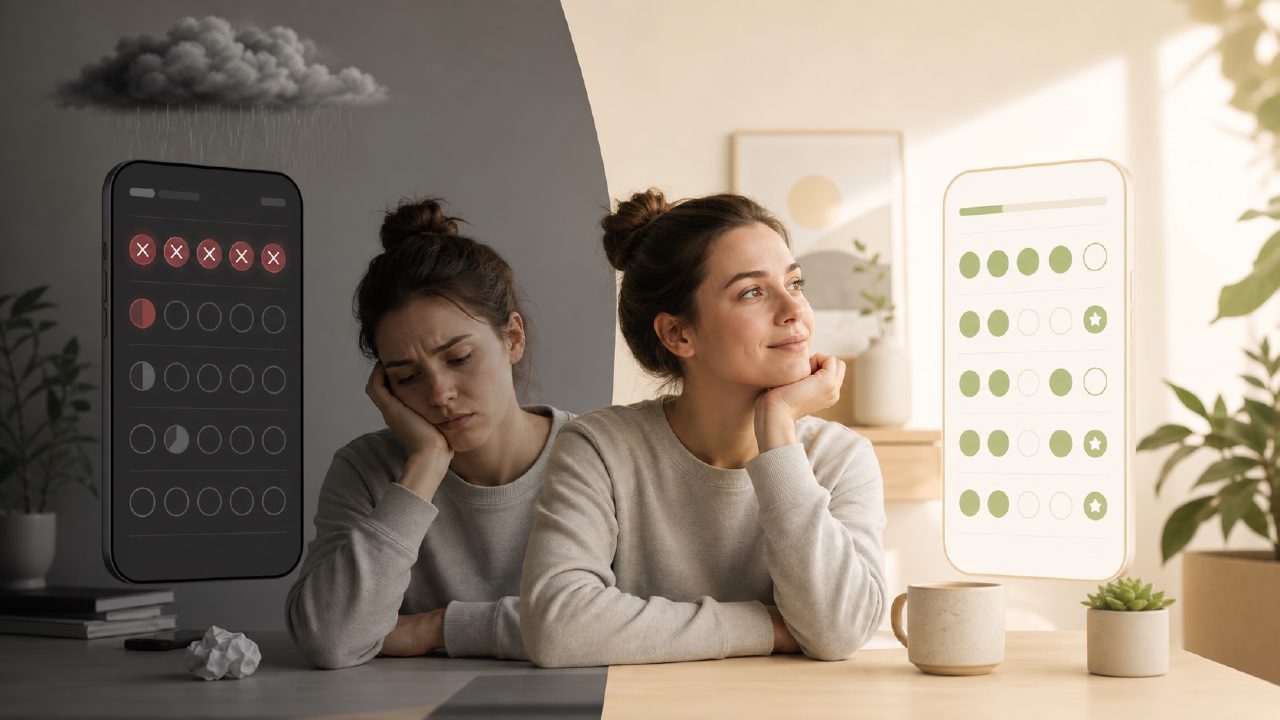
I’ve tested more habit apps than I care to admit, and the one thing they all have in common is that they make you feel like a failure within the first week. When I picked up Habitly, I was skeptical for the same reason. But after a few weeks of using it, I realized the app itself wasn’t the problem — it was the way I (and most people) approach habit tracking in general. So instead of writing a standard review, I’ll walk through the common mistakes and caveats I see people make when using a habit app, and how Habitly either helps or makes them worse.
PTFALL #1: Starting with too many habits at once
This is the classic trap. You download the app, feel motivated, and add seven habits on day one. Morning meditation, evening journaling, drink eight glasses of water, do 50 pushups, read 20 pages, practice an instrument, and learn a language — all before breakfast. Within three days, you’ve already dropped three of them, and by the end of the week you feel guilty every time you open the app.
Habitly doesn’t stop you from doing this. Its interface is clean and lets you add as many habits as you want with a few taps. But the app does have a feature that nudges you to focus: a “maximum active habits” suggestion in the onboarding flow. I ignored it, and I regretted it. If you’re trying to find the best free ai habit tracker 2026 might offer, remember that AI can’t save you from your own ambition. The app is only as helpful as the limits you set.
PTFALL #2: Letting streaks become the whole point
Streak tracking is satisfying — I get it. Habitly shows a continuous chain of checkmarks, and seeing a long streak feels like proof of discipline. But there’s a hidden downside: one missed day can kill your momentum completely. I’ve seen people abandon the app entirely after breaking a 30-day streak, as if the whole effort was worthless.
Habitly gives you a “streak freeze” option (like some other apps), but it’s limited. You can’t pause a habit or mark it as “partial.” So if you’re sick or traveling, your streak takes a hit. That’s a realistic tradeoff — you get simple tracking, but no flexibility. For someone looking for a free ai habit tracker app 2026 that adapts to real life, Habitly might feel rigid. I wish it allowed you to excuse a day without breaking the chain, but that’s not how it works.
PTFALL #3: Ignoring timing and context
Many habit apps let you set a reminder time and that’s it. Habitly does the same. But here’s the gotcha: habits don’t always fit neatly into a fixed 30-minute window. I set “exercise for 20 minutes” every day at 6 PM. But some days I had a late meeting, or I was too tired after work, and the reminder just added guilt.
What I found was that Habitly lacks a “time of day” flexibility — you can’t set multiple reminder windows or a “do before bedtime” option. This is a limitation if your routine changes day to day. The app assumes consistency, but life isn’t always consistent. If you’re evaluating the best free ai habit tracker for an unpredictable schedule, you might need something that allows more nuanced scheduling.
PTFALL #4: Expecting it to do everything
Habitly is not a habit coaching app. It doesn’t analyze your behavior, suggest new habits, or tell you why you keep skipping workouts. It’s a simple streak tracker with reminders. That’s fine if you just need a digital checklist. But I’ve seen reviews where people complain that it doesn’t have AI-powered insights or gamification beyond streaks. Those are valid concerns — but they’re not bugs; they’re design choices.
If you’re specifically searching for the best free ai habit tracker 2026, you might be disappointed. Habitly doesn’t pretend to be AI. It’s straightforward and somewhat minimal. That can be a strength (no noise) or a weakness (no help when you’re stuck). I lean toward seeing it as a tool for people who already know what habits they want to build and just need a lightweight reminder system.
So who gets the most out of Habitly? Someone who has already defined their habits and wants a clean interface to track them without distractions. It’s not for people who struggle with motivation or need dynamic coaching. And that’s fine — a habit app doesn’t have to be everything to everyone. Just don’t expect it to fix your willpower. That’s still on you.
Comments
Leave a Comment