You know the cycle. Download a habit tracker, fill in five ambitious goals on day one, check them off for maybe a week, then slowly watch the green dots fade to gray. The problem isn't usually laziness—it's that most habit apps treat every day like a standalone event. They don't push you to think in systems. That's the gap Habitly Routines tries to fill: instead of just giving you a checklist, it wants you to build better routines that actually stack together and hold up over time.
How Habitly Approaches Routine Building
Most habit trackers start with a blank list. You type in "meditate," "read," "run," and off you go. Habitly flips this slightly. The app leans into the idea of routines—grouped sequences of habits tied to a specific time or context. So instead of a scattered list, you might have a "Morning Wake-Up" block that chains a short stretch, ten minutes of journaling, and then coffee. The sequence matters because it reduces the decision fatigue of figuring out what to do next after you finish one thing.
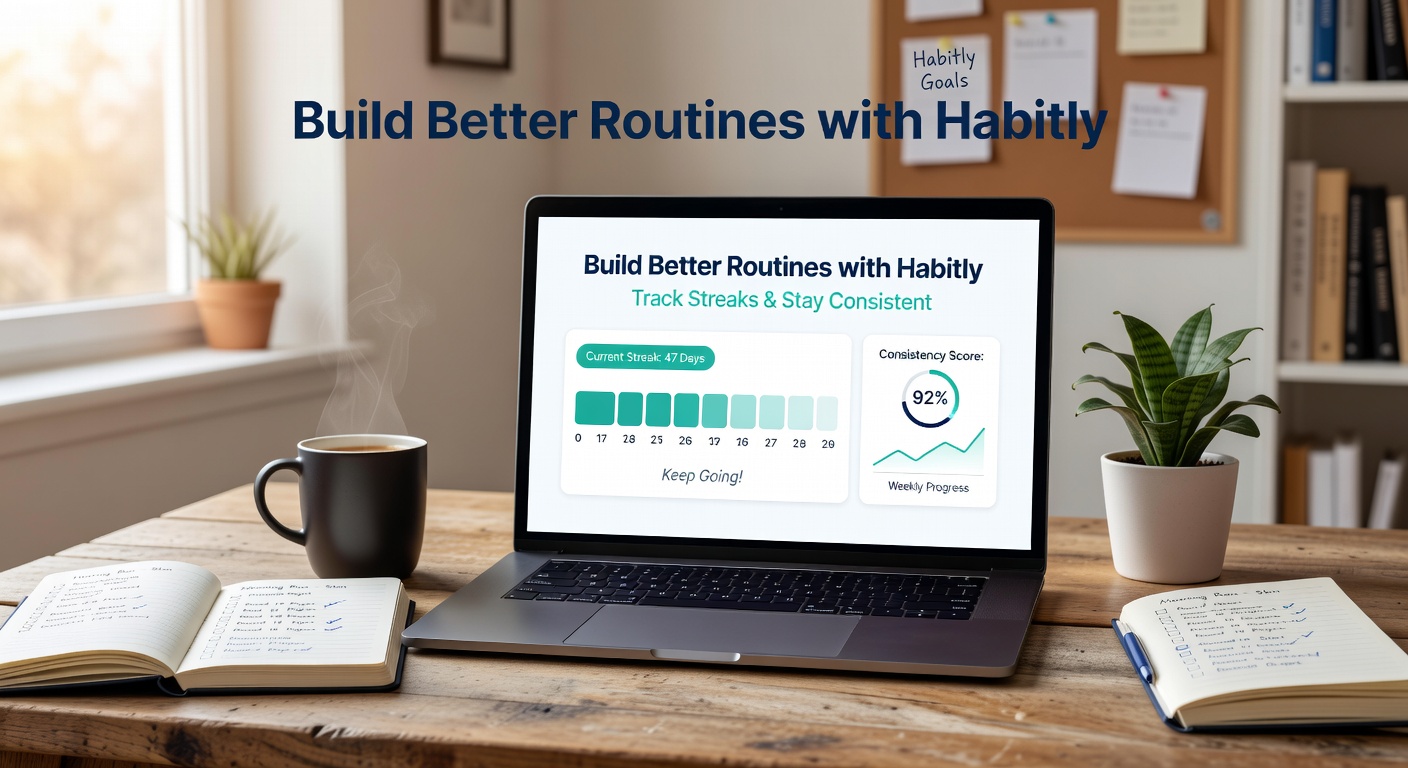
The streak mechanic is familiar, but Habitly keeps it relatively low-pressure. You can see your current streak and your longest, but the app doesn't punish you aggressively for missing a day. It logs the gap and moves on. This matters more than it sounds—streak-based apps that reset to zero after one slip tend to kill motivation rather than protect it.
Where It Works Well
A few concrete scenarios where the routine approach clicks:
Study blocks. If you're prepping for exams or learning a language, a routine lets you group "review flashcards → read one chapter → write three summary sentences" into a single flow. You're not deciding what to study next each time; the sequence carries you.
Wind-down routines. Evening habits are notoriously fragile because willpower is low by 8 PM. Having a pre-set "device off → light stretch → read fiction" routine removes the need to negotiate with yourself when you're already tired.
Health consistency. Things like taking supplements, drinking water before meals, or doing a five-minute mobility drill are easy to skip when they float loosely in your day. Bundling them into a labeled routine makes the trigger clearer—"after lunch, I run the midday block."
Recovery after a gap. Because routines are grouped, if you miss three days and come back, you don't face a dozen disconnected checkboxes. You open the routine, start at the top, and the structure carries you through. It's easier to re-enter momentum.
Tradeoffs and Fit
Habitly isn't trying to be a full project manager or a detailed analytics dashboard. If you want charts showing your completion rate over the last six months broken down by category, this isn't the tool. The feedback loop is simple: streaks, completion dots, and routine-level consistency. That's enough for most people, but data-focused users might find it thin.
The app also assumes you're building positive habits. It doesn't have a dedicated "quit" mode for tracking avoidance—like logging days without social media or days without alcohol. You can hack this by creating a "No X" habit, but it's not designed for that use case. If breaking a bad pattern is your primary goal, something like I Am Sober or a more behavior-specific tool might fit better.
Another consideration: Habitly's strength is routine grouping, but if your schedule is highly irregular—shift work, frequent travel, unpredictable deadlines—the fixed-block model can feel rigid. You can rearrange routines, but the app doesn't dynamically reschedule based on context. People with stable morning and evening windows will get more out of it than those whose days shift constantly.
Compared to alternatives like Habitica (gamified RPG approach), Streaks (polished minimalism), or Loop (open-source offline), Habitly sits in a middle zone: structured enough to guide you, light enough not to overwhelm. It won't reward you with virtual gold or punish you with streak resets. It just quietly reflects whether your system is running or stalling.
Staying Consistent Long-Term
The real test of any habit app is whether you're still opening it in month three. Habitly's routine structure helps because you're not maintaining a dozen isolated habits—you're maintaining two or three blocks. That's cognitively simpler. When one habit in a routine starts slipping, the others often pull it along because you're already in the sequence anyway.
If you've repeatedly stalled out on habit tracking because isolated checklists feel disconnected and fragile, build better routines with Habitly and see whether the grouped structure changes how you re-enter after a gap. It won't fix everything—no app can make your mornings less chaotic or your evenings less drained—but it gives you a framework that's slightly harder to abandon than a floating list of good intentions.
Comments
Leave a Comment