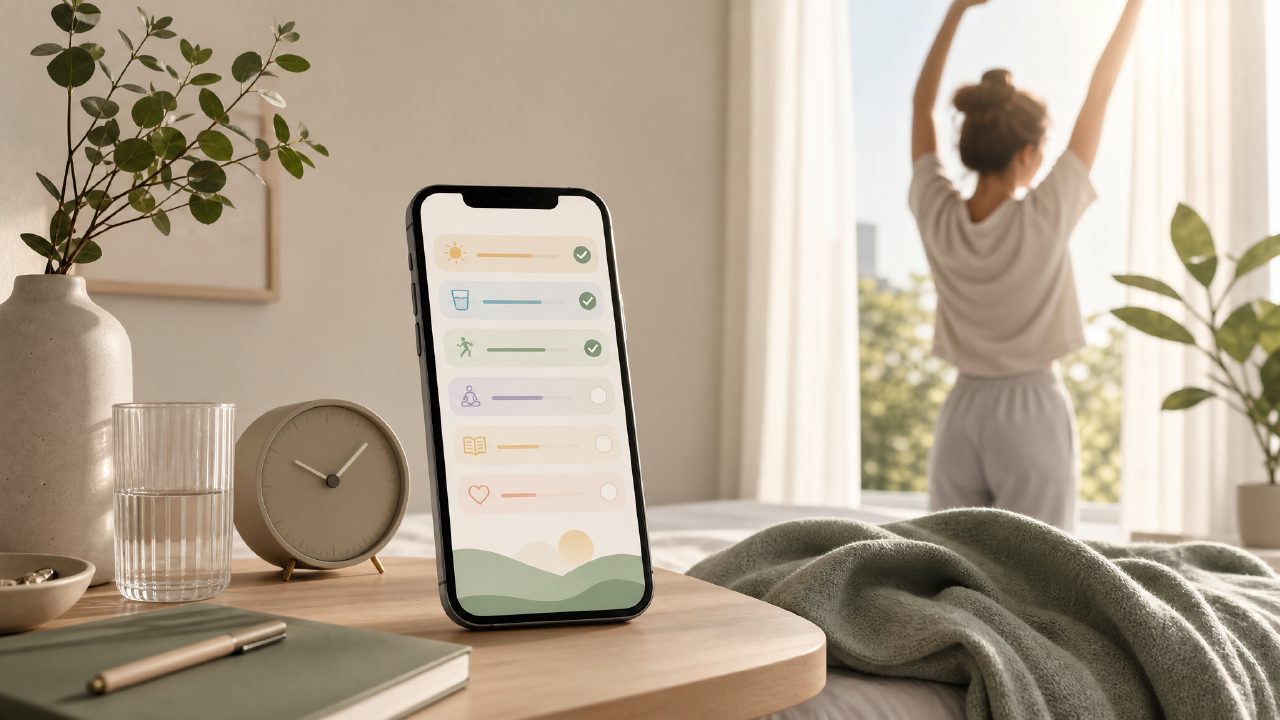
Can an app actually fix your morning routine?
I’ve tried more morning routine systems than I’d like to admit – paper journals, bullet lists, alarms labeled “wake up dummy” – and they all worked for about a week. So when I stumbled across Habitly, I wasn’t expecting much. But after a few weeks of testing it as my morning companion, I had some genuine surprises and frustrations worth talking about.
Below are the most common questions people have when they consider using an ai habit tracker with reminders to build a morning routine, answered from real use.
Q1: Is Habitly actually good for a morning routine, or is it too generic?
It depends on what you need. For a simple morning checklist – drink water, stretch, no phone – it works fine. But I initially wanted something that could adapt when my plans changed (woke up late, travel day, etc.). The app doesn’t auto-reschedule missed habits; you have to manually check them or let the streak break. That was a bit of friction. On the other hand, the streak visual is strangely motivating – I’ve kept my 6:30 AM tea habit for 23 days now, which I never managed before. It’s not perfect, but it’s honest. The reminder system is solid: you get a notification and a nudge that feels persistent without being annoying.
Q2: How does it compare to other habit apps? Is it the best ai habit tracker 2026?
I can’t speak for every app out there, but I can say Habitly does one thing better than the free tools I tried: it groups habits into custom routines. I created a “wake up” routine that fires at 6:30 AM – brush, stretch, read, journal. The app leads me through step-by-step, which is surprisingly helpful when your brain is still foggy. Is it the best free ai habit tracker 2026? It does have a generous free tier. But the AI part is subtle – it suggests tweaks to your routine timing based on completion rates, which I noticed after about two weeks. It suggested I move “face wash” earlier because I kept skipping it. I listened, and it worked. So the AI is there, but it doesn’t shout about it. The tradeoff: the paid version unlocks deeper analytics, but the free version covers a solid morning routine.
Q3: Will it actually make me consistent? What’s the catch?
It helped me be more consistent, but not magically. The biggest catch is that you still have to want to change. I learned that if my morning motivation was low, Habitly’s reminders became background noise. What did help: the ability to log habits with a single tap. That removed the friction of writing things down. Plus, seeing a 3-day streak made me not want to break it. But I did have a moment where I missed three mornings in a row during a work trip, and the app didn’t adapt – no “skip this week” option. That felt limiting. So it’s good for stable weeks, less flexible for chaotic ones.
Q4: How specific should I get with my morning routine? Does Habitly handle micro-habits?
I tested this by adding “take vitamin D” (10 seconds) and “meditate 3 minutes” next to “workout 30 minutes”. It handled the mini tasks just fine. But one thing that bothered me: there’s no way to set variable durations for the same habit on different days. For example, I meditate longer on weekends. The app only allows one time block per habit. I had to create a separate weekend meditation habit, which felt redundant. Small limitation, but it’s real. So if your morning routine varies a lot by day, you’ll need extra setup.
Q5: Final verdict – should you use Habitly for your morning routine?
Honestly, I’d say yes if you’re someone who benefits from a structured checklist and visible streaks. It’s not a life miracle, but it’s a reliable scaffold. If you’re a chaos-morning person who hates notifications, you might find it annoying. But I’m keeping it for now because it helped me stop forgetting the basic stuff when my brain isn’t awake yet. The ai habit tracker with reminders aspect works best when you give it a few weeks to learn your patterns. And the free version is good enough that you’re not losing much if you test it for a month.
Comments
Leave a Comment