Let’s be real: the whole “stay consistent” thing sounds downright boring when you’re not already hyped up on self-improvement vibes. Even the pros—people who’ve built multiple routines—admit that some days the streak feels more like a chore than a choice. That’s exactly where Habitly shows up with a different promise: what if consistency didn’t have to feel like homework?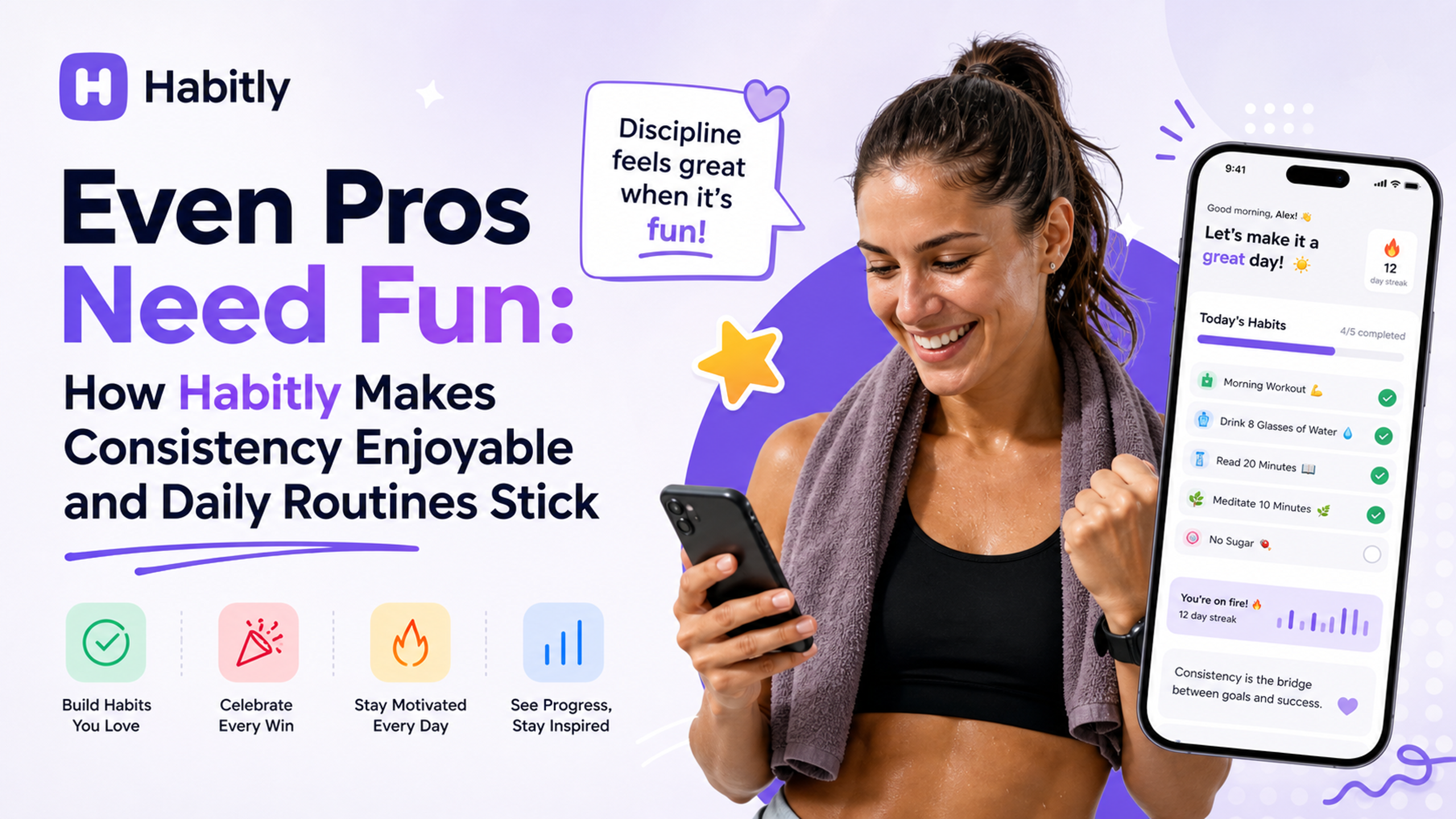
Why most habit apps fail the “fun” test
I’ve tried a handful of popular habit trackers. They all share the same rhythm: check a box, watch the green bar grow, move on. That works for about three weeks. Then the novelty wears off and the app becomes just another notification you swipe away. The problem isn’t your willpower—it’s that the experience is built like a spreadsheet.
Habitly takes a different approach. It doesn’t just count streaks; it makes you want to keep them. The interface feels more like a progress feed you’d scroll through casually, not a strict logbook. Small animations, subtle rewards, and a tone that says “you’re doing fine” instead of “DON’T BREAK THE CHAIN.” This shift matters when your motivation is at 30%.
Real scenarios where Habitly actually sticks
Scenario 1: The “post-gym shame” cycle. You go hard for a week, miss two days, then feel like a failure and stop entirely. Habitly softens that landing. It doesn’t punish a missed day with a loud red reminder. Instead, it nudges you to pick up where you left off without the guilt trip. For someone in their mid-20s balancing work, friends, and random Netflix binges, that forgiveness is the difference between giving up and staying in the game.
Scenario 2: Study sessions that actually start. Ever opened a textbook, told yourself you’d study for two hours, and ended up watching videos for 40 minutes? Habitly’s “mini-habit” mode lets you set a 5-minute baseline. You hit that small win, and suddenly the momentum carries you further. The app’s tone feels like a friend saying “just do five minutes,” not a coach yelling “you should be doing more.”
Scenario 3: Focus blocks that don’t feel prison-like. Pomodoro timers work, but they often feel rigid. Habitly lets you define custom routines with flexible durations. You can set a “deep focus” block for 25 minutes, then a “stretch” block for 3 minutes. The transitions are smoother, and the visual feedback is satisfying enough that you want to complete the loop.
The fine line between fun and distraction
There’s a fair concern: does making consistency “fun” water down the discipline? I wondered the same. After testing Habitly for two weeks alongside a more traditional tracker, I noticed a key difference. The fun elements in Habitly—gentle confetti, streak badges, playful notifications—aren’t designed to replace the habit’s substance. They’re there to lower the friction to start. Once you’re in the routine, the seriousness of the task (like studying or working out) still demands your actual effort.
The tradeoff? If you’re someone who thrives on strict accountability and visible data charts, Habitly might feel too light. Its analytics are clear but not deep. Power users who want weekly reports with detailed breakdowns might miss that granularity. But for most young professionals and students who are already juggling enough structure in their lives, this lighter touch is a feature, not a flaw.
Who should give Habitly a shot?
If you’ve tried to build a habit multiple times and always fell off after a few weeks, Habitly is worth a try. It’s especially good if you’re the type who gets bored easily, or if you associate habit tracking with guilt rather than progress. Also, if you’re a “binge then crash” kind of person, the app’s gentle approach can help you smooth out that spike.
On the flip side, if you need a hardcore system with reminders every 30 minutes and cold-turkey streak resets, look elsewhere. Habitly’s strength is in making you want to return, not in forcing you to.
At the end of the day, staying consistent isn’t about being the most disciplined person in the room. It’s about finding a system you don’t want to quit. Habitly makes that quest a little less serious—and that might be exactly what makes it stick.
Comments
Leave a Comment