Downloading a habit tracker is easy. Using it past week two is the hard part. Most apps feel like a digital chore chart—stiff grids, guilt-inducing red Xs, and zero joy. That’s exactly why concepts like funny life logging & buddy check-ins for steady good habits are gaining traction. If the process of building a routine is miserable, the routine itself won’t survive. Habitly Routines tries to fix this by swapping out the sterile spreadsheet vibe for something a bit more human.
Why Funny Life Logging & Buddy Check-ins for Steady Good Habits Beat the Spreadsheet Vibe
Standard habit apps ask: "Did you do the thing?" You tap "Yes." End of story. Habitly’s life logging approach asks you to add a little flavor to the entry. It’s the difference between a corporate timesheet and a personal diary.
Take a morning run. Instead of just ticking off "Cardio," you can log that it was pouring rain, you stepped in a puddle, and you looked like a drowned rat by mile two—but you still finished. That tiny snippet of reality changes how you review your progress later. You aren’t just looking at a sterile streak; you’re reading the messy, funny backstory of how you actually stayed consistent.
Or think about a reading habit. Logging "Read 20 pages" is forgettable. Logging "Read 20 pages of chapter 4, which was an absolute slog, but I survived" makes the tracker feel alive. It acknowledges that habits aren't robotic; they're embedded in real, often ridiculous days.
Then there’s the social side. Streaks are fragile. One missed day and the visual chain breaks, which is enough to make a lot of people abandon the app entirely. Buddy check-ins shift the pressure from a digital chain to a real person.
Habitly lets you link up with friends for mutual tracking. But this isn’t about posting your flawless green grids on Instagram. It’s more like a low-pressure nudge. Say you and a coworker are both trying to stop late-night snacking. When 9 PM hits, you get a check-in ping. If you fail, you can just admit it—"I just inhaled an entire bag of Doritos"—and your buddy can respond with a laughing emoji or confess they also just ate a sleeve of Oreos. The guilt evaporates, but the awareness stays. You’re still checking in tomorrow.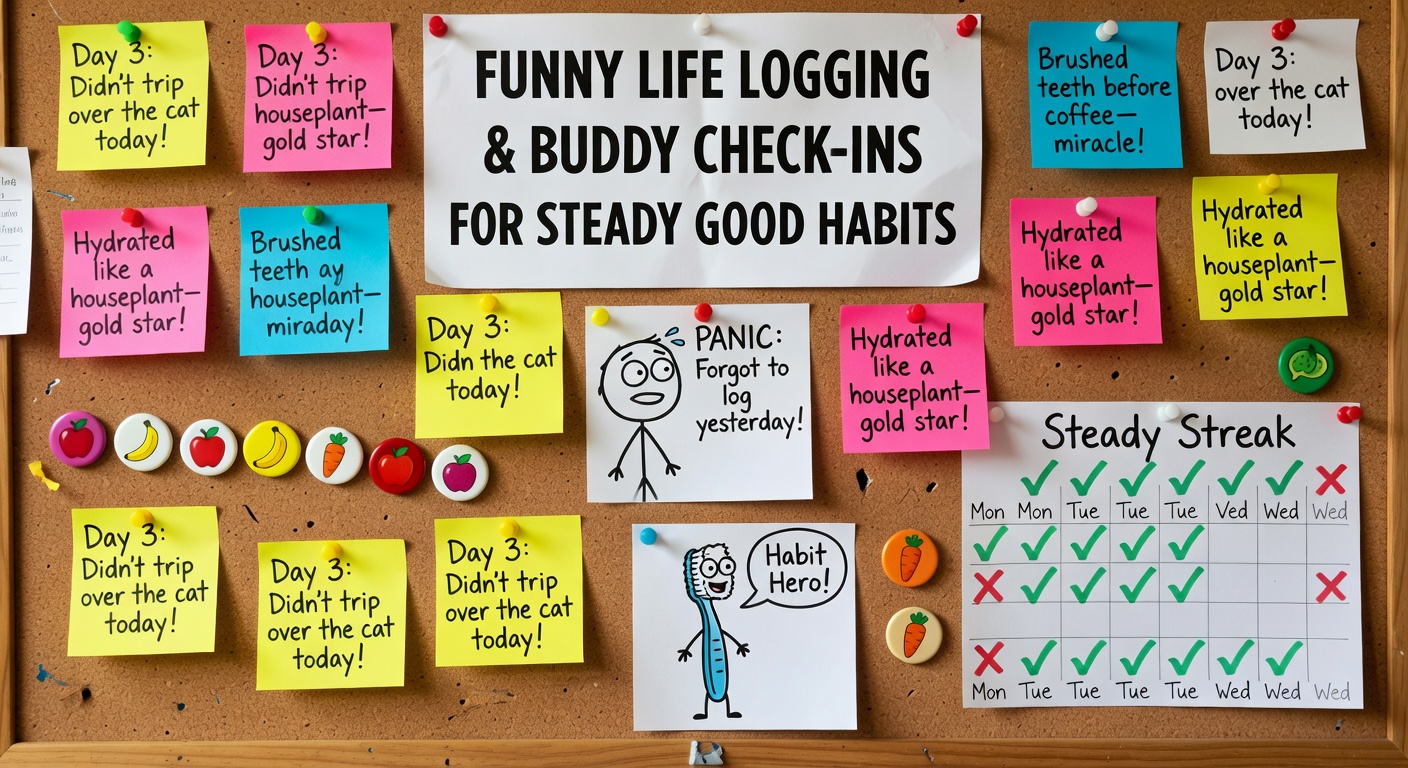
Should You Swap Your Current Tracker?
Habitly’s approach works well if you’ve historically abandoned trackers because they felt too strict or isolating. The humor and social aspect lower the barrier to entry and make the process sticky. It’s built for people who need a little noise and companionship to push through the boring middle phase of building a habit.
But there’s a real tradeoff here. If you are the type of person who loves hard data—charts, completion percentages, time-series analytics—this app might feel a bit loose. The focus is on narrative and connection over cold metrics. You won’t get a perfectly color-coded heatmap of your life. If you treat habit tracking like a science experiment, you might find the "funny" logging distracting and the buddy features unnecessary. In that case, a more rigid app like Strides or a custom Notion setup will serve you better.
It’s also worth noting that the buddy system only works if your friends actually use the app. If you invite someone who ignores the check-ins, the feature falls flat and you’re back to solo tracking. You need at least one equally motivated (or equally messy) partner to get the real benefit.
Consistency isn’t about willpower; it’s about making the process tolerable enough that you don’t quit. Funny life logging & buddy check-ins for steady good habits won’t magically make you love waking up at 5 AM, but they do make the whole ordeal a lot less lonely and a lot more amusing. If your current routine tracker feels like a digital detention center, bringing some personality and a friend into the loop might be the exact tweak you need to finally stick with it.
Comments
Leave a Comment