Most habit apps put the work on you. You set the goal, pick the frequency, decide the reminder time, and hope the streak pressure is enough to keep you going. Habitly takes a different angle — its AI layer tries to reduce that setup friction and nudge you toward routines that actually stick.
Whether that's genuinely useful or just a feature checkbox depends on how you actually use it.
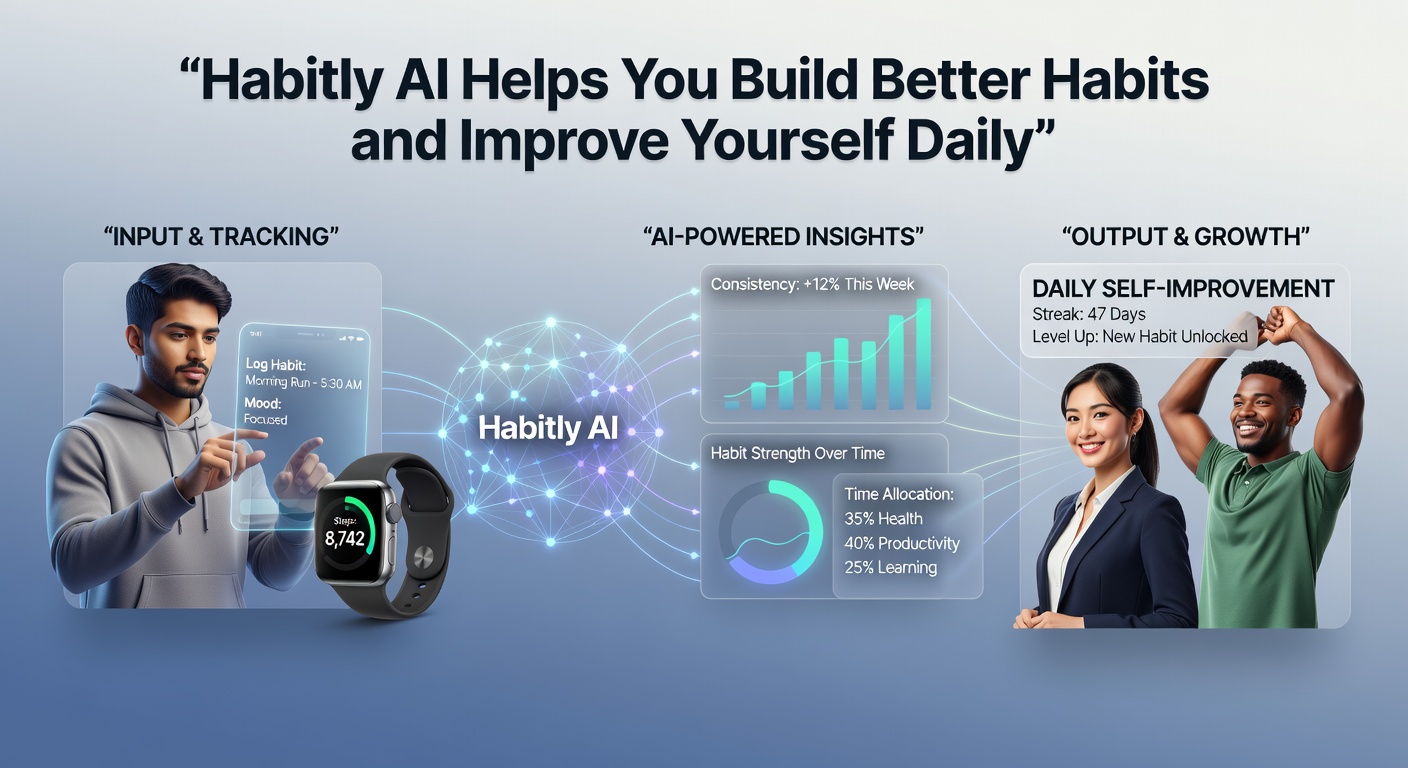
What the AI Does in Practice
Habitly's AI doesn't replace your judgment — it helps you structure it. When you're building a new routine, it can suggest habit stacks based on your goals, like pairing a morning focus block with a short review session at night. It also flags when your streak patterns suggest you're overloading a single day, which is a common reason people quietly abandon routines after week two.
The daily check-in prompts are short and specific rather than motivational. Instead of "how are you feeling today?", you get questions tied to the habits you're actually tracking. That specificity makes a difference when you're tired and just want to log and move on.
Where It Fits Well — and Where It Doesn't
If you're building habits around health, study, or focus work, Habitly's structure maps well to those goals. The streak tracking is visible without being aggressive, and the routine builder lets you group habits by context — morning, work, wind-down — rather than just listing them in a flat queue.
It's less suited to highly irregular schedules. If your days vary a lot — shift work, travel, freelance — the streak model can feel punishing rather than motivating. The AI suggestions also work better once you've logged a few weeks of data; early on, the recommendations are fairly generic.
For people who already have a solid system in Notion or a paper planner, Habitly probably adds more overhead than value. It's most useful when you're starting from scratch or trying to rebuild consistency after a gap.
A Few Concrete Scenarios
Someone trying to build a study routine for an exam might use Habitly to stack a daily review habit with a timed focus session, letting the AI suggest a realistic daily minute target based on their logged availability. Someone recovering from burnout might use the lighter "maintenance mode" — tracking just two or three non-negotiable habits without the pressure of a full routine rebuild.
The personal growth angle works best when the habits are specific and measurable. "Read more" doesn't give the AI much to work with. "Read 15 pages before bed" does.
The Honest Tradeoff
Habitly's AI is genuinely helpful for reducing decision fatigue at the start of a new routine. It won't transform your discipline or fix a chaotic schedule. What it does well is lower the barrier to getting started and give you a lightweight feedback loop that doesn't require a lot of manual reflection.
If you've tried habit apps before and dropped them because setup felt like a second job, Habitly is worth a try. If you dropped them because you just didn't follow through, the AI layer won't solve that — but the routine structure might help you understand where the friction actually is.
Comments
Leave a Comment