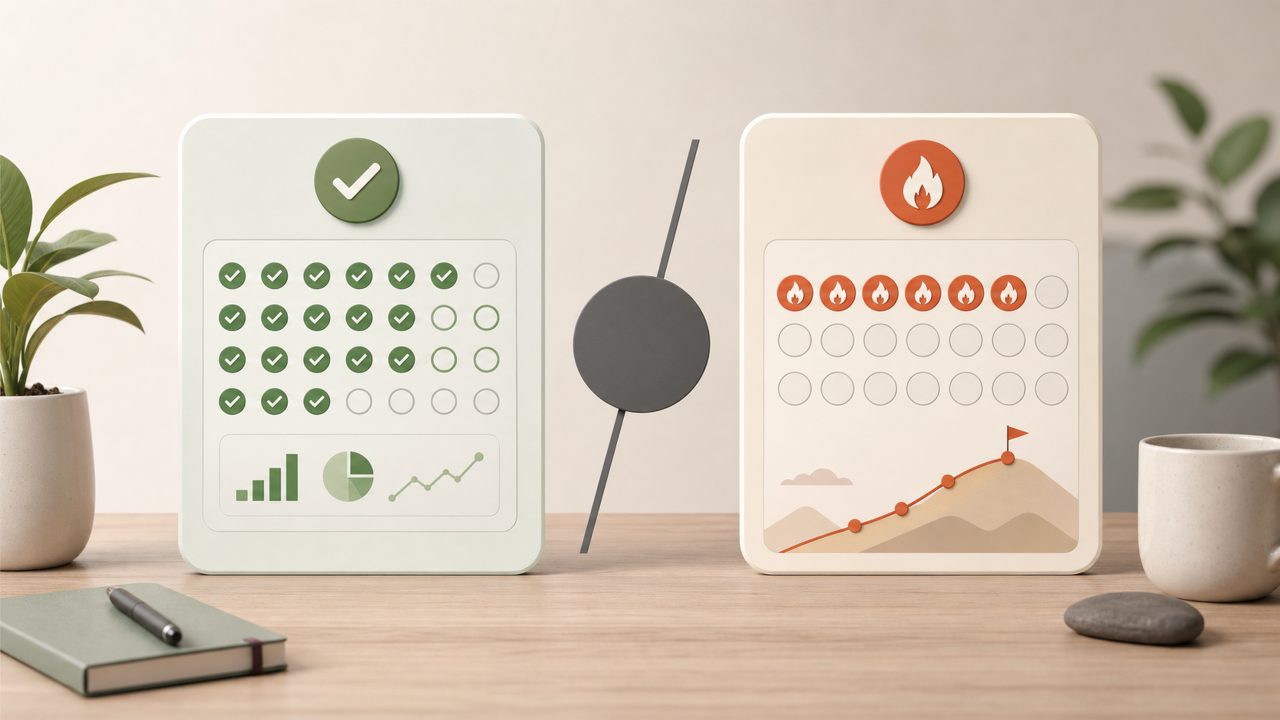
If you’ve spent any time looking for a habit tracker that actually sticks, you’ve probably come across two names: Habitly and Streaks. Both claim to help you build routines and keep you consistent, but they approach the problem differently. I tested both side by side over a couple of weeks, and the differences were clearer than I expected. Below is a FAQ-style breakdown of what actually matters when you’re choosing between them.
What is the core difference between Habitly and Streaks?
Streaks is a straightforward iOS app that focuses entirely on tracking how many days in a row you perform a habit. It’s simple, visual, and very good at what it does. Habitly, on the other hand, is a cross-platform free AI habit tracker app 2026 that tries to be more than just a streak counter. It includes AI-generated suggestions for routines, categories like health, study, focus, and personal growth, and a system that adapts to your progress. Where Habitly feels like a coach that nudges you, Streaks feels like a scorecard you fill out yourself.
Which one is easier to start using?
Streaks is dead simple: you pick a habit, set a target, and check it off each day. That’s it. Habitly takes a few more minutes to set up because it asks about your goals and preferences before suggesting routines. I found the onboarding in habitly slightly more involved, but not off-putting. For someone who just wants to start tracking a single habit immediately, Streaks wins on speed. For someone who wants structure across multiple areas of life, Habitly’s extra steps actually help you think about what you want to improve.
Does Habitly’s AI really make a difference?
The AI component is what sets habitly ai habit tracker apart from most traditional habit apps. During testing, I set a goal to read 15 minutes daily. Streaks just reminded me. Habitly asked if I wanted to split it into two smaller sessions on busy days, suggested evening reading because I had a pattern of morning distractions, and even offered to reschedule the habit after I missed two days. I wasn’t expecting that level of reactivity. It’s not perfect—sometimes the suggestions are a bit obvious—but for someone who tends to fall off after the first week, the AI gives a reason to keep coming back. It felt less like a dead streak and more like a conversation.
Which app handles missed days better?
Streaks penalises you harshly. Miss a day and your streak resets to zero. That’s motivating for some people, but it can also be discouraging. Habitly is more forgiving: you can mark a day as “partial” or let the AI adjust the target for the next few days. I missed three days of a habit in Habitly, and the app suggested reducing the daily frequency from 7 to 5 times a week. I thought that was a reasonable adjustment, and it kept me from feeling like I had failed entirely. For someone who battles perfectionism, Habitly’s flexibility is a clear advantage.
What about pricing—is there a free option?
Streaks costs $4.99 one-time on iOS. That’s it. No tiers, no subscriptions. Habitly operates on a freemium model. The free tier gives you access to the core habit tracking, AI suggestions, and daily streak monitoring. Some advanced features—like detailed analytics or synchronised routines across devices—require a subscription. If you’re looking for an ai habit tracker app free option, Habitly delivers without forcing you into a trial. The paid tier is optional and targets users who want deeper reporting. Streaks is cheaper long-term, but its features are also much narrower.
Which app works best for students or people with irregular schedules?
I’m a student in the middle of exam prep, so this mattered to me. Streaks expects you to check in once per day. If you study at erratic hours, it can feel rigid. Habitly allows you to define flexible windows (morning, afternoon, evening) and even lets you schedule multiple check-ins for the same habit. I used it to track study blocks, and it handled the variability much better. For example, I set a habit of “focus study for 1 hour” with a flexible afternoon window. On days when my lectures ran over, Habitly automatically pushed the suggestion to evening. Streaks couldn’t do that. The tradeoff is that Habitly sometimes suggests odd timings if your history is sparse, but after a week of data it becomes fairly reliable.
What realistic tradeoff should I consider?
The main tradeoff is simplicity versus depth. Streaks is polished, focused, and never distracts you from the core action of checking a habit. Habitly gives you more—more recommendations, more forgiveness, more categories—but that comes with a busier interface and a slight learning curve. I occasionally found myself tapping through Habitly screens that I didn’t need, while with Streaks I opened the app, checked my habit, and closed it. That said, the extra features in Habitly are directly relevant to habit formation, not bloat. If you’re someone who already knows exactly what habits you want and how to structure them, Streaks is the cleaner tool. If you want help discovering routines or recovering from slips, Habitly is the better bet.
So which one should I pick?
It depends on what you’re struggling with. If your main problem is remembering to check a habit every day, Streaks will do that well and cheaply. If your problem is maintaining consistency after setbacks, or if you want guidance on what habits to build in the first place, habitly vs streaks tilts clearly toward Habitly. The AI is not a gimmick—it genuinely helped me keep going when I would have quit with Streaks. But I also appreciate the simplicity of Streaks for habits I already had locked in. I ended up using both for different purposes, but if I had to recommend just one for most people, especially those new to habit tracking, I’d point them toward Habitly. It feels like it was designed for real human inconsistency, not ideal discipline.
Comments
Leave a Comment