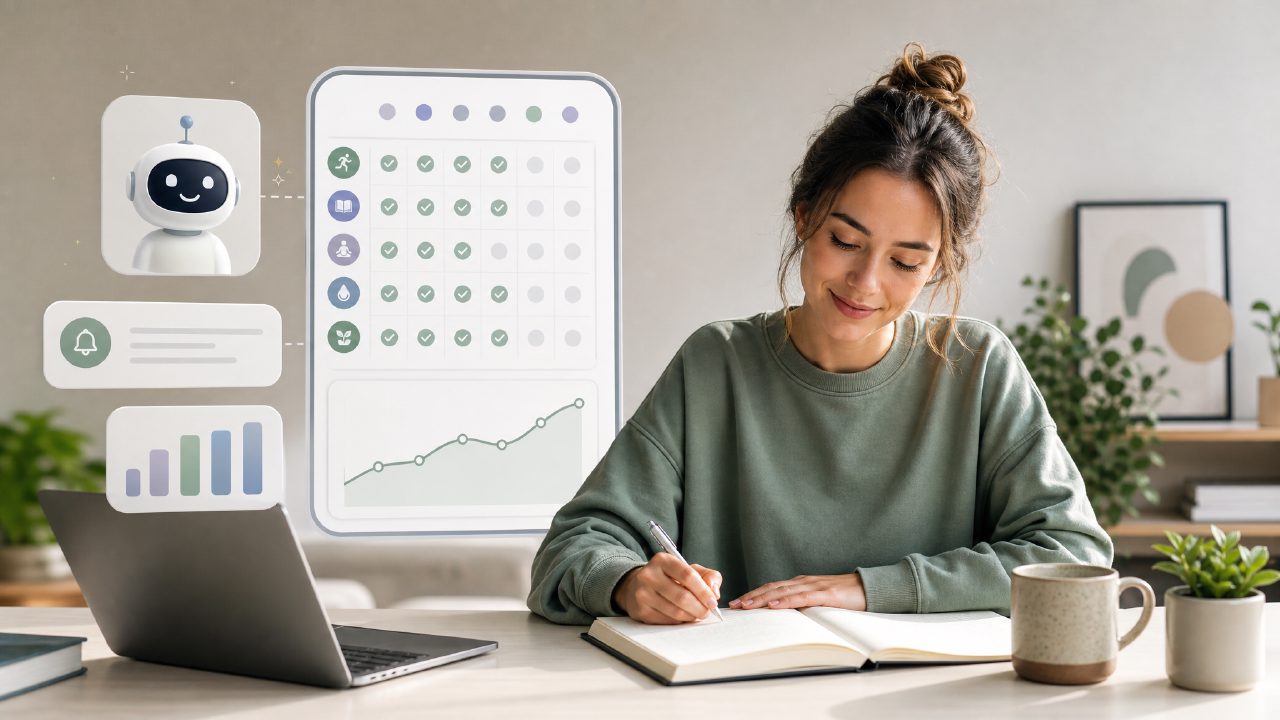
I’ve tried a dozen habit apps over the years. Most of them are either too rigid (think: “wake at 5 AM, meditate 20 min, journal” – great if you’re a robot) or so flexible they become useless. When I started looking for an ai habit tracker with reminders that actually adapts to how I live (not how I wish I lived), I landed on Habitly. I wanted to test it in a real, messy week – not a curated “perfect routine” scenario. Specifically, I had one goal: build a morning routine for focus without turning my phone into a nagging machine.
Here’s how that went, and what I actually noticed using Habitly day to day.
Setting up the morning routine: what actually happened
I decided on three habits for the first week: drink water first thing, 5-minute stretch, and write one sentence about the day ahead. Simple, concrete. Habitly’s onboarding asks you to name your habit, choose a frequency, and set a reminder time. So far, so normal. The AI bit kicks in after a few days – the app looks at your completion patterns and suggests tweaks. For example, after I kept skipping the stretch on days when I had early meetings, Habitly suggested I move the reminder to 20 minutes later or split the stretch into two shorter ones. That felt… reasonable. Not life-changing, but genuinely useful.
Three things I noticed during the week
1. The AI suggestions got better after day three
First two days, the “AI” part felt like a timer with a nudge. “You haven’t completed your stretch yet – maybe try 3 minutes instead of 5?” That’s okay, but not deep. By day four, it noticed I always finished the water habit (easy) but struggled with the stretch (low motivation). It suggested I pair the stretch directly after the water – a classic habit stacking trick, but delivered contextually. For a free tier, that level of best free ai habit tracker behavior was surprising. It wasn’t just generic advice; it was based on my actual tap history.
2. Streak tracking actually motivated me more than I expected
I rolled my eyes at streaks before testing. But seeing “5-day water streak” in the morning made me not want to break it. The app shows streaks per habit, not just a single global number. That’s smart – you can have a perfect water streak and a messy stretch streak without the shame spiral. One friction: if you forget to open the app and mark a habit done, the streak breaks silently. No pop-up begging you to cheat. I appreciated the honesty, but I also lost my stretch streak on day two because I marked it at 2 PM instead of 7 AM. The app didn’t care. Streak logic is strict, which is both good and slightly punishing.
3. Reminder timing felt a bit aggressive for the free version
You can set as many reminders as you like, but the default setup sends three nudges per habit unless you turn them off. I got a notification at 6:55 AM, another at 7:30, and a third at 8:15. For a simple morning routine, that was overkill. I dialed it to one reminder per habit. The app didn’t save that preference for new habits I added later – I had to manually adjust each one. That’s a minor annoyance, but it points to a broader issue: the free ai habit tracker app 2026 version (the one I tested) is generous with features but not fully polished on UX details. I can live with it, but if you’re someone who hates tweaking settings on every new habit, that could get old.
The realistic tradeoff: AI insights vs. manual effort
Habitly’s AI only works if you feed it data consistently. That sounds obvious, but many apps claim “smart adjustments” that never happen. Here, the AI really does respond to your completion logs. But if you skip two days in a row, the suggestions become generic again – it resets to “maybe try a smaller habit?” That’s fair, but it means the AI is only as good as your current streak. For someone with erratic schedules, the app might feel like a lightweight coach that’s sometimes useful, sometimes silent. I’d call it a habitly ai habit tracker that prioritizes consistency over complexity. If you want deep behavioral analysis (why you skip, emotional triggers), look elsewhere. This is more about nudging you gently based on what you actually did.
One more limitation: the AI only analyzes one habit at a time, not your full routine. I wanted to see if my stretch skipping correlated with days I also skipped the sentence-writing. Nope – the app doesn’t cross-reference yet. That’s probably a premium feature or future update. For now, each habit lives in its own little world.
Would I stick with it?
After a week, I kept using it. Not because it’s revolutionary, but because the reminders are persistent enough without being annoying (once I tuned them), and the AI’s small suggestions actually made me adjust my routine in ways I wouldn’t have thought of myself. The water + stretch pairing was a direct result of **habitly** noticing my pattern. That’s more than most trackers offer.
If you’re shopping for an ai habit tracker with reminders and you don’t want to pay for premium before you’re sure, the free version of Habitly is worth a spin. Just know that the first few days feel basic, and the AI only becomes genuinely helpful after about 72 hours of consistent logging. It’s not magic – it’s a genuinely good pattern-recognition tool wrapped in a simple app. And for a short test like mine, that’s exactly what I needed.
Comments
Leave a Comment