You’ve tried setting alarms. You’ve tried writing goals on sticky notes. You’ve even tried that fancy habit tracker app. But somehow, after two weeks, you’re back to hitting snooze and telling yourself you’ll start again tomorrow.
The problem isn’t motivation—it’s accountability. When you’re the only one who knows you skipped a day, it’s too easy to let it slide. That’s where teaming up with friends changes the game.
Why group accountability actually works
I’ve tested this with a small group of friends using Habitly Routines. The idea is simple: you create a shared habit goal, like “read 20 minutes daily” or “do a 10-minute stretch,” and everyone logs their progress. The app shows each person’s streak publicly within the group. If someone misses a day, everyone sees a break in their chain.
That visible streak matters more than you’d think. In my group, the first missed day was awkward. People started sending playful reminders in the chat. Within a week, the social pressure turned into genuine encouragement. We weren’t competing; we were helping each other stay consistent.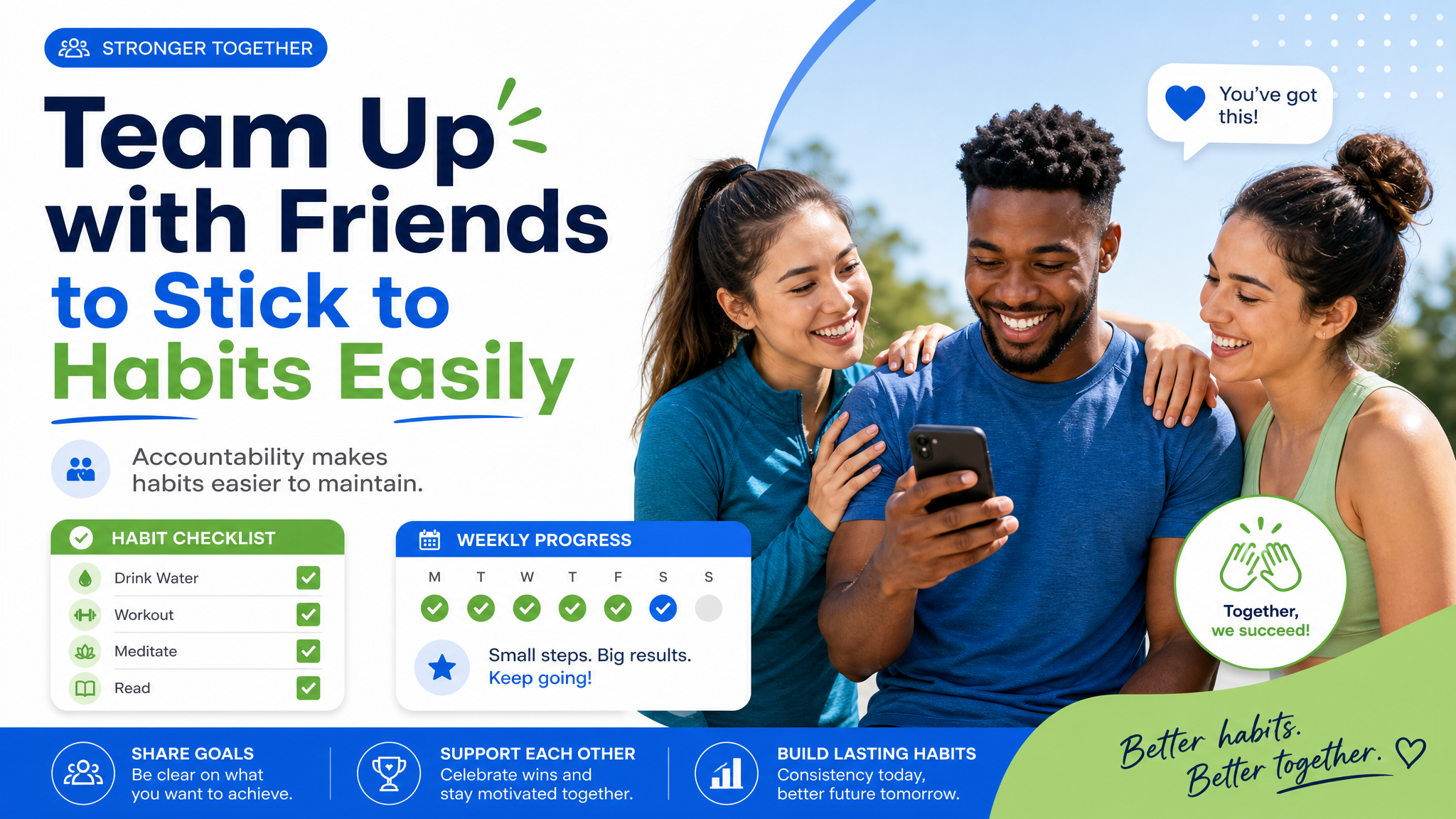
Realistic scenario: the “push each other” dynamic
One friend in our group wanted to build a morning writing habit. She kept failing when it was just her and a notebook. Once three of us started logging the same habit in Habitly, her streak jumped from three days to eighteen. She said the group kept her honest—not because we judged her, but because she didn’t want to be the one breaking the chain.
Another friend used it for hydration. He’s a forgetful drinker. We all set “drink 8 glasses of water” as a shared habit. Seeing his zero-streak next to our green checkmarks was enough to make him refill his bottle. It’s not magic—it’s simple social reinforcement.
The tradeoffs you need to know
Group habit tracking isn’t for everyone. A few things to consider before dragging your friends into Habitly:
- Group size matters. More than five or six people and the feed gets noisy. People start ignoring updates. Keep it small—close friends or a focused accountability circle.
- Different commitment levels create friction. If one person is casual while another is serious, the serious person might get frustrated by broken streaks. Better to find people with similar dedication.
- Privacy is a real concern. Not every habit is meant to be shared. Weight goals, financial habits, or mental health routines might feel too exposed. Use Habitly’s private groups or create separate groups for different categories.
- It requires active participation. Setting up the group and checking in takes effort. If the group goes silent, the system falls apart. Someone needs to be the energizer—usually the one who started it.
Alternatives if a full group doesn’t fit
If gathering friends feels overwhelming, try a one-on-one accountability partner in Habitly. Two people can share a habit and check each other’s streaks daily. That’s often easier to sustain. Or you can join public habit challenges within the app, where you don’t need to recruit anyone—just follow existing groups.
Another alternative is to use Habitly solo but share your streak screenshot in a private chat with one friend. That gives you the accountability without the full group setup.
How to start without overthinking it
Pick one habit you’ve been struggling with. Invite two or three friends who also want to build that same habit. Create a shared challenge in Habitly Routines. Agree on the minimum effort—no one needs to be perfect, just logging the attempt counts. Check in daily for two weeks. If the streak keeps breaking, adjust the habit size. Make it smaller until it’s embarrassingly easy to do.
Most people quit because they feel alone in the effort. A little social scaffolding goes a long way. Habitly makes it straightforward to see who’s consistent and who needs a nudge. And sometimes that nudge from a friend is all you need to keep going.
Comments
Leave a Comment