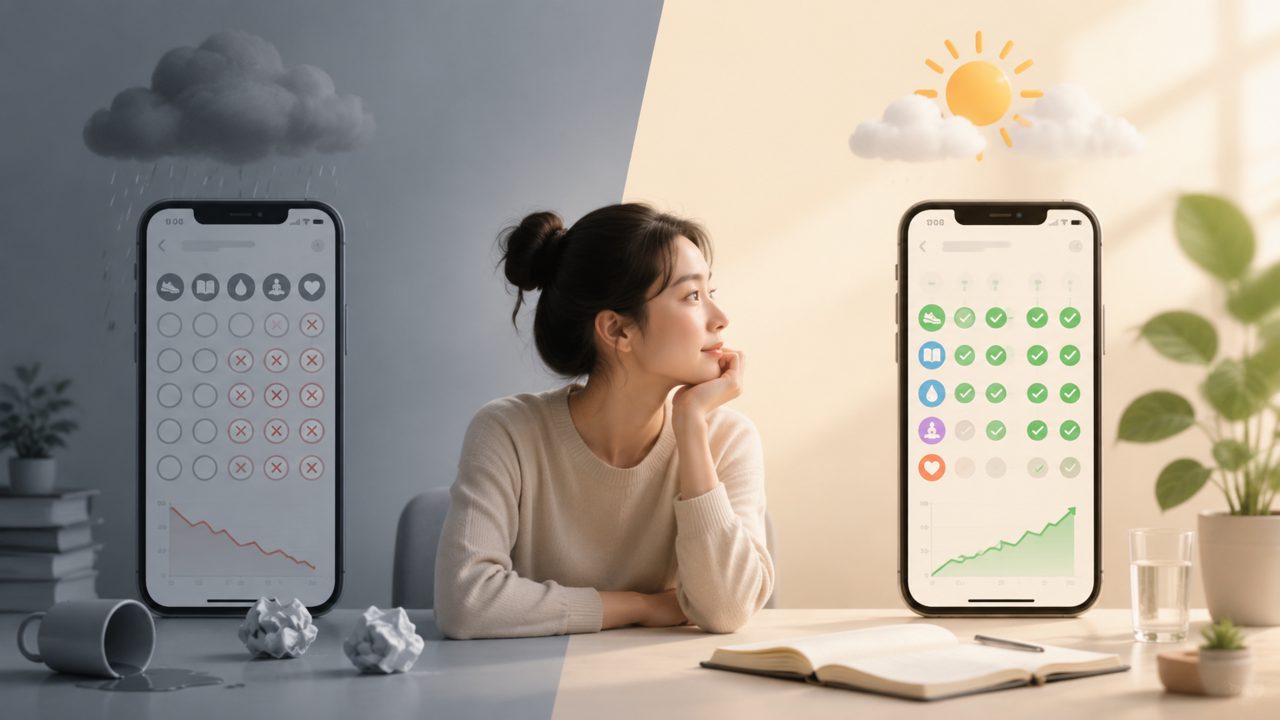
You download a habit app, set up a bunch of goals, feel motivated for three days, and then forget it exists. That’s the loop most people hit. I’ve been through it with at least six different apps over the years. When I started testing habitly (and a few alternatives), I was looking for something that could actually break that cycle. But the more I dug in, the more I noticed the same pitfalls surfacing again and again. Here’s what I found—both good and frustrating.
The over-hyped streak trap
Almost every habit app, including habitly, puts streaks front and center. You miss one day, your streak resets, and the app makes sure you know it. In theory that’s motivating. In practice it can backfire hard. I tested habitly for two weeks and on day five I marked a habit “done” even though I hadn’t really done it—just to keep the streak alive. The app doesn’t stop you. It treats consistency as binary: you either did it or you didn’t. There’s no nuance for partial effort or off days.
That’s fine if you’re disciplined. But if you’re not, the streak mechanic can turn a productivity tool into a guilt machine. The better approach I found was to use the “skip without breaking streak” option if the app has one. Habitly does have that, but it’s buried in a settings menu you wouldn’t look at unless you knew it was there. It should be front and center for new users.
Feature creep vs. actual simplicity
What surprised me about habitly is how many extra layers it tries to offer. Beyond basic habit tracking, there are notes, reflection prompts, and a “focus mode” that’s supposed to help you concentrate. I personally found the focus mode a distraction—it’s basically a timer with no special integration. Why not just use your phone’s timer?
This gets to a broader gotcha with a lot of habit apps: they try to be everything to everyone. If you just want to check off “drink water” every morning, you don’t need a journaling feature or a mood tracker. The more busy the interface, the less likely you are to open it every day. A free ai habit tracker app 2026 should probably be leaner than what we’re seeing now. Habitly is better than some in this regard—it doesn’t bombard you with ads or upsells—but the feature list still feels shaped by what competitors do, not by what a tired person needs at 7am.
Notifications: necessary annoyance
You kind of need reminders, but the default settings in habitly are aggressive. I got a notification at 8am, noon, 6pm, and 9pm for the same habit. That’s four taps to dismiss every day just for one task. The app lets you customize notification timing per habit, but I suspect most casual users won’t bother tweaking that. They’ll just get annoyed and turn notifications off entirely.
One concrete observation: the notification text is generic. Instead of “Don’t forget to meditate,” it just says “Time for Meditation.” Small thing, but it felt less motivating than a simple “5 minutes—you got this” style message. I don’t expect a habit app to be a life coach, but a little personality in the reminder goes a long way.
The best free ai habit tracker 2026? Not so fast
Is habitly the best free ai habit tracker 2026? That depends entirely on how you define “AI.” There’s no real intelligence driving suggestions. The app doesn’t learn your patterns or nudge you to change a habit that you keep skipping. It’s a clean spreadsheet with streak logic and a nice design. That’s fine—but it’s not AI in any meaningful sense. If you search for a “free ai habit tracker app 2026,” you might expect something that adapts to your behavior. Habitly doesn’t do that. At least not yet.
That’s a realistic tradeoff: you get a polished, no-nonsense tracker with good data export options and no paywall. But if you want actual algorithmic suggestions or adaptive scheduling, you’ll need to look elsewhere or wait for updates. The app is still in active development, and the AI label feels more like a marketing placeholder than a delivered feature.
Final thought: it works if you don’t overthink it
After a few weeks with habitly, I settled into a rhythm. I stopped trying to use every feature. I set three core habits, turned off all notifications except one morning reminder, and ignored the streak anxiety. That simple setup actually held up better than any complex system I’d tried before. But it took effort to get there—the app didn’t guide me toward minimalism.
If you’re evaluating a habit app right now, don’t get caught up in streaks, AI buzzwords, or feature lists. Start with one or two habits and see if the tool stays out of your way. Habitly can do that, but you’ll have to deliberately ignore half of what it offers. That’s not a dealbreaker—it’s just a caveat worth knowing before you download.
Comments
Leave a Comment