Let's be real—sticking to a habit alone is overrated. You download an app, set a goal, feel motivated for three days, and by day four you're already pretending the notification didn't pop up. That's not a you problem. That's a solo-mode problem.
What actually works? Public pressure. Or, more nicely put: group supervision.
This is where Habitly actually gets it. The app leans hard into the idea that seeing your friends' streaks—and them seeing yours—turns a boring checkbox into a low-stakes competition. And somehow, that works way better than internal motivation ever did.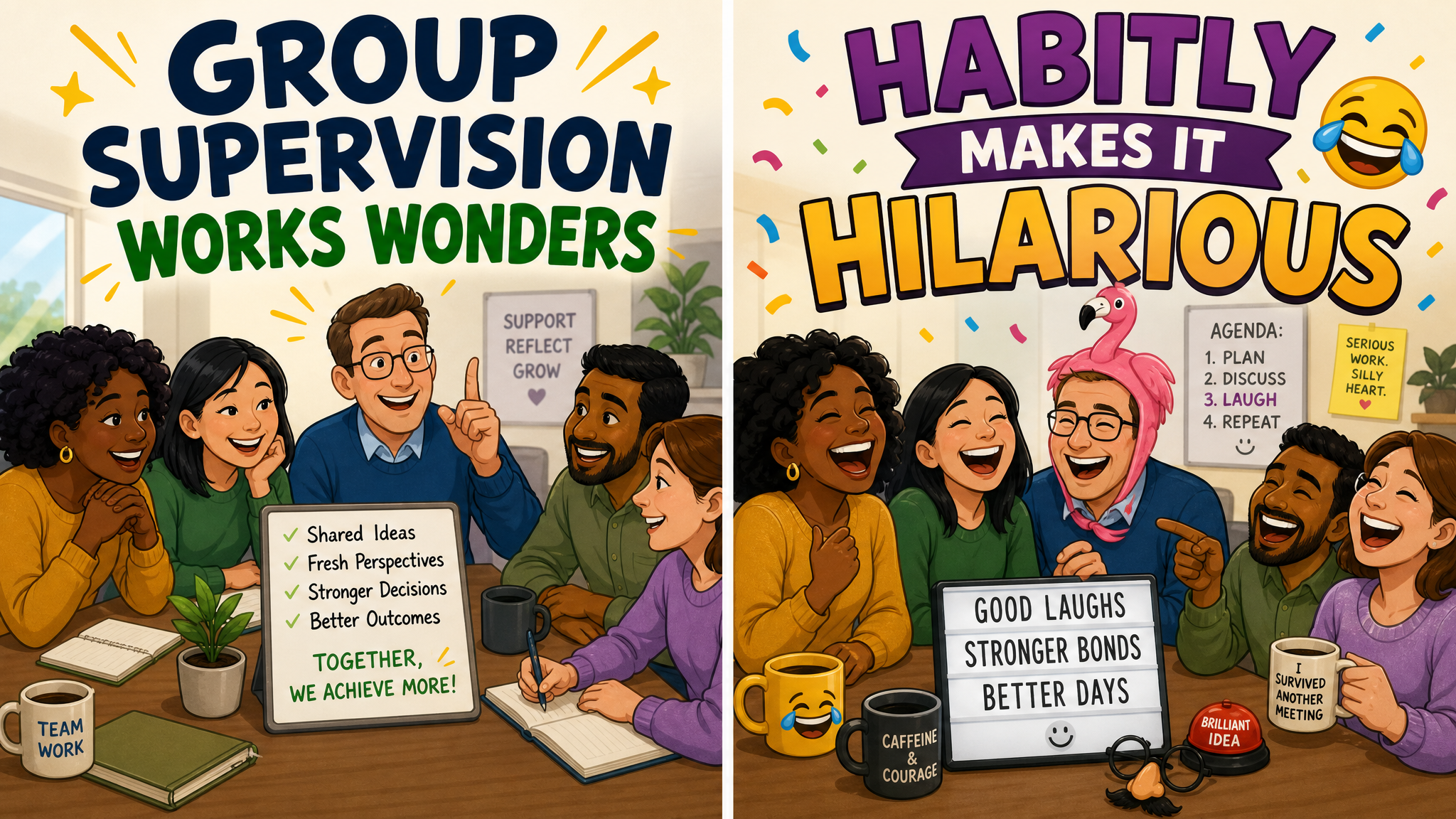
Why watching your friend's streak matters more than your own
I tested this with a small group of four friends. We set a simple goal: drink water first thing in the morning. Nothing groundbreaking. But Habitly's group view shows everyone's streaks in one feed. When you see that your friend Sarah hasn't missed a single day in two weeks, you don't feel proud of her—you feel slightly annoyed. And that annoyance gets you out of bed to drink that stupid glass of water.
The app doesn't shame you directly. It just quietly shows you that three out of four people in your group are doing better than you. That's the hook.
The hilarious part: nobody wants to be the weak link
In my group, we have an unwritten rule: if you miss two days in a row, you have to send a funny apology sticker in the chat. Habitly doesn't enforce this—we made it up ourselves. But the app makes it easy to see who's slipping, which turns accountability into something actually entertaining.
Another scenario: I joined a group focused on "study focus hours." One member, Leo, kept losing his streak because he'd fall asleep mid-session. The group started tagging him with emojis every time he dropped off. It sounds childish, but Leo's streak went from 2 days to 18 days after that. The embarrassment was real, and so was the progress.
Where group supervision actually falls apart
Not everything is rosy. If your group is too passive—people who never check the feed or never react—the effect fades fast. You need at least one person who enjoys calling out missed days. Also, if someone in the group is doing too well, it can actually demotivate the rest. I've seen groups where one person's 100-day streak made everyone else give up because it felt unattainable.
Another issue: habit mismatch. If your group is working on wildly different things (meditation vs. running vs. reading), the shared feed becomes noise. Nobody cares about your 10-minute meditation streak when they're sweating through a morning run. The app works best when the group goal is roughly aligned, even if the specific habit differs.
So if you're thinking about using Habitly for group accountability, here's what actually matters:
- Pick people who will notice when you slack. Friendly strangers don't work as well as actual friends.
- Set a minimum group size of 3. Two people feels too intimate for accountability—easy to negotiate excuses.
- Add a silly penalty. It doesn't have to be real money. A sticker, a dumb photo, a voice note. The embarrassment is the currency.
- Check the feed daily. Passive members kill the dynamic. If nobody looks, nobody cares.
Bottom line
Group supervision with Habitly isn't magic—it's just better than going solo. The app gives you the structure, but your friends give you the shame. And honestly, a little shame goes a long way. If you've been struggling alone, pull in two or three people, set something easy, and see what happens. Worst case, you get some funny group chat material. Best case, you actually show up.
Comments
Leave a Comment