Most habit trackers feel like homework. You wake up, open the app, check a box, and move on. It works for a week, maybe two. Then you miss a day and suddenly the whole streak feels broken. The guilt creeps in, and instead of building a routine, you're just managing a to-do list that never ends.
Habitly approaches this differently. It doesn't treat habits as chores you're supposed to do. It treats them as small wins you actually want to collect.
The streak mechanic that doesn't punish you
A lot of apps rely on streaks to keep you hooked. Miss one day and you lose everything. That might work for a competitive personality, but for most people, it just creates anxiety. You start dreading the app instead of feeling good about it.
Habitly handles streaks in a way that feels more forgiving. Instead of resetting to zero, it shows you your overall momentum. You still see your consistency, but one missed day doesn't feel like failure. It feels like a break. That small psychological shift matters more than you'd think.
I tested this personally with a reading habit. Other apps made me feel like I had failed if I skipped Tuesday. With Habitly, I just picked up on Wednesday without the emotional baggage. The habit stuck longer because the tool didn't shame me.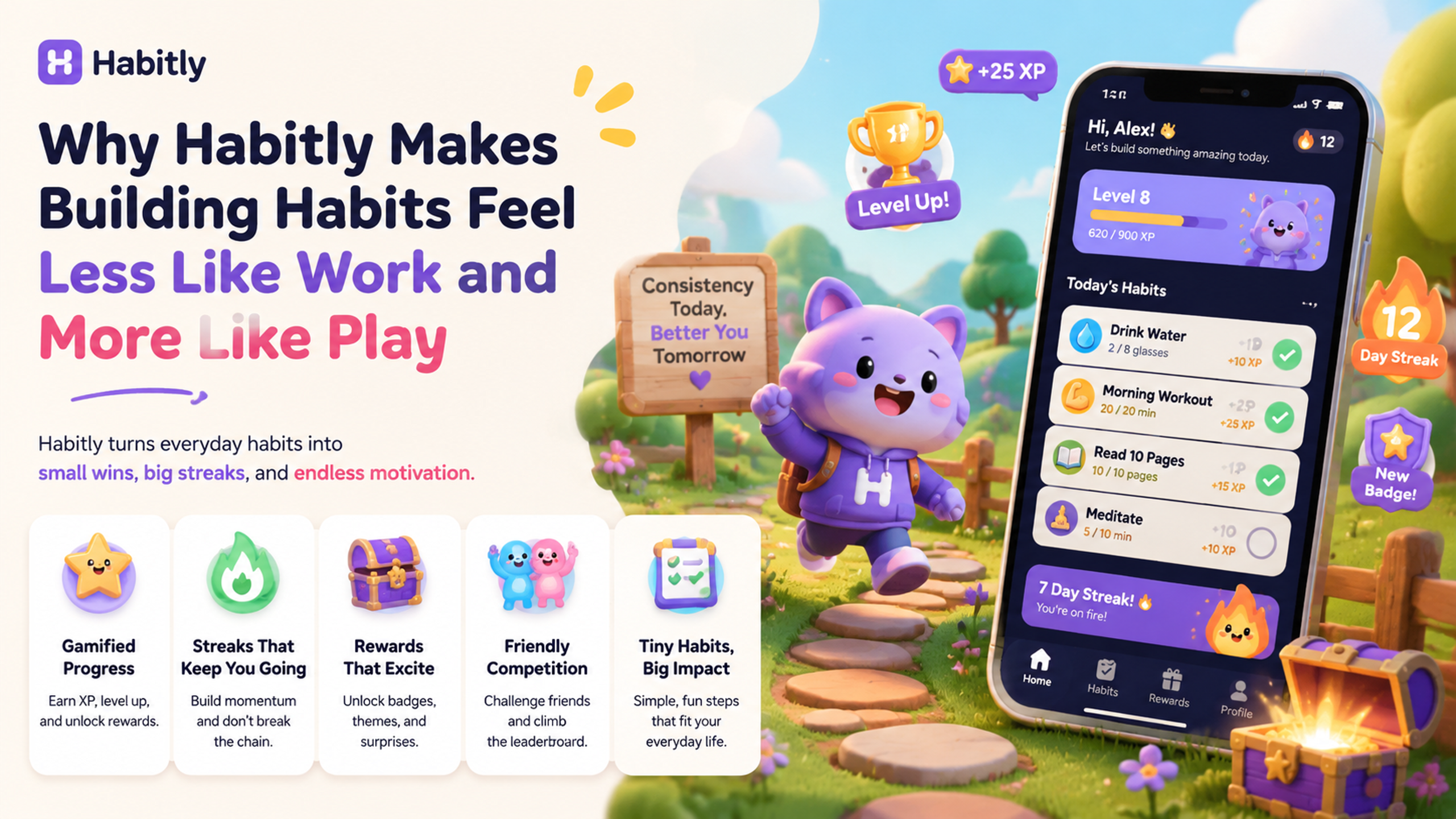
Where Habitly actually made a difference
I tried it with three different scenarios over a month.
First, morning stretching. I never managed to stick with this before. Habitly's reminder system let me set a gentle nudge instead of an aggressive alarm. The tone matters. It felt like I was reminding myself, not getting scolded by an app.
Second, evening focus time. I blocked 30 minutes after dinner for deep work. Habitly let me organize this as a "focus" routine rather than just another task. Separating routines by category—health, study, focus, personal growth—helped me see where my energy was going.
Third, drinking enough water. This one surprised me. I never thought an app could make hydration feel satisfying. But Habitly's interface celebrates small wins without being obnoxious. The visual feedback is quick, cheerful, and then it gets out of your way.
The tradeoffs worth knowing
Habitly is not a do-everything app. If you want deep analytics, habit time tracking, or complex habit stacking diagrams, this might feel too simple. It's designed for people who want consistency without overthinking the system.
There's also a limit on how many habits you can run at once in the free tier. If you're trying to overhaul your entire life in one week, you might hit that ceiling. But honestly, trying too many habits at once is a recipe for quitting anyway. The constraint might actually help you focus.
Another thing to consider: Habitly works best if you're comfortable with a phone-based check-in system. If you prefer pen and paper or a desktop-first approach, the mobile nature of the app might not match your rhythm.
Who should actually use this
Habitly fits best if you've tried other habit apps and found them too rigid or too punishing. It also works well if you're building habits for different life areas and want everything in one clean place instead of jumping between sticky notes, calendar alerts, and random app notifications.
If you're a hardcore productivity nerd who loves spreadsheets and custom metrics, this probably isn't your tool. But if you want a habit system that feels like a partner rather than a boss, Habitly hits that balance well.
The real test is whether you still use it after two weeks. For me, it passed. I'm still stretching in the morning and drinking water like it's my job. That's more than I can say for the last four habit apps I tried.
Comments
Leave a Comment