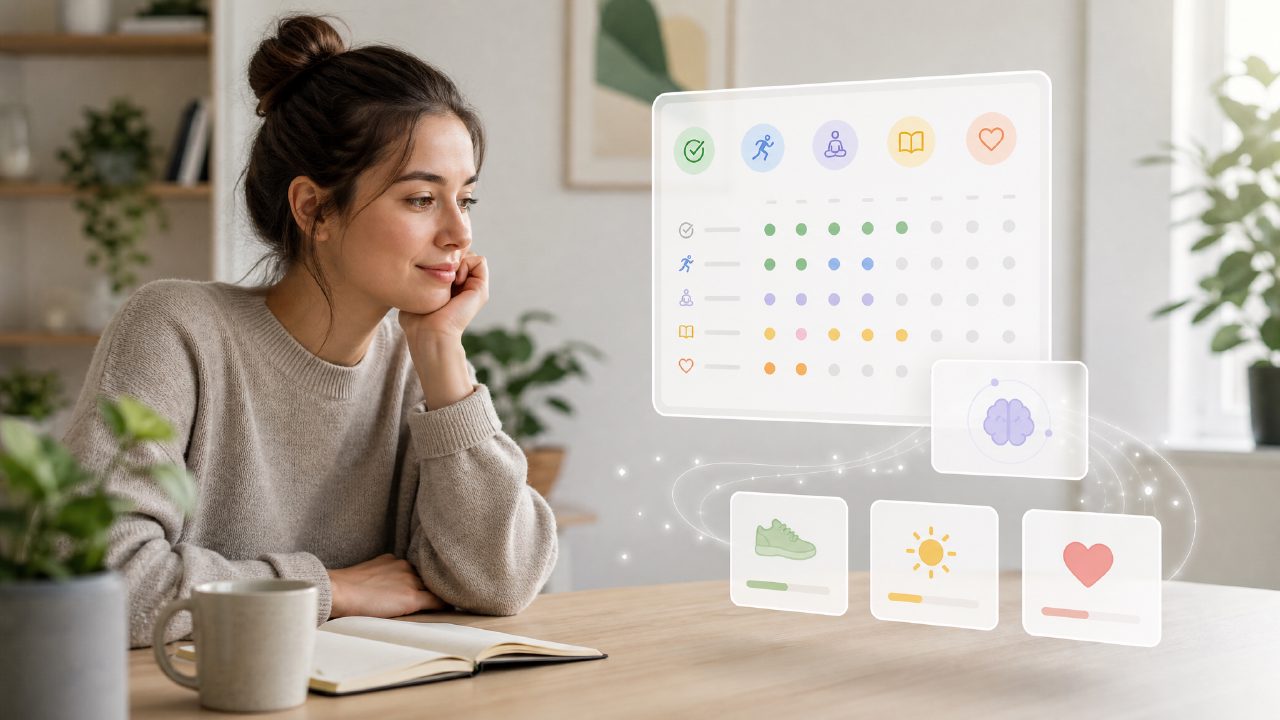
I’ve been testing habit trackers for years. Most of them are just checklists with a “streak” counter and some motivational quotes. The moment you fall off, they punish you with a broken chain and zero follow-up. So when I started evaluating Habitly and its ai habit tracker with smart suggestions, I was skeptical. Does the AI actually help, or is it just another gimmick bolted onto a to‑do list? I spent a few weeks poking at it — here are the answers to the most common doubts.
What makes an ai habit tracker with smart suggestions different from a regular habit tracker?
A plain tracker expects you to know exactly what habits to build and when. The AI layer tries to reduce that guesswork. Habitly watches what you actually log — or fail to log — and then offers adjustments. For example, I kept missing a “read 20 minutes” reminder I had set for 9 PM. After three skipped days, the app suggested I move it to 7:30 PM, right after dinner. It seemed obvious in hindsight, but the fact that the app prompted it instead of just recording my failure was genuinely useful.
This is where the ai habit tracker with suggestions label earns its keep — it isn’t just tracking, it’s reacting. The system also considers which habits you tend to skip together and offers to pair a disliked task (say, stretching) with a liked one (listening to a podcast). Whether you find that helpful depends on how much structure you want from your tools.
Does Habitly actually give useful suggestions, or are they random?
I’d say about half the suggestions I received were genuinely useful. The others felt either obvious or slightly off — like recommending a “study focus” block at 2 AM because I had logged one late‑night session three weeks ago. That’s the tradeoff. The AI relies on your data, so if your logging is sparse or erratic, the suggestions will be too.
Here’s a concrete example: I set up habits for work focus, water intake, and evening journaling. After a week, Habitly noticed I was consistently finishing “water intake” but regularly skipping “journaling.” It proposed merging them into one “hydration + journal” block every evening. I tried it — and honestly, it felt unnatural. Drinking water while writing in a journal is awkward. But the fact that the app tried to find a connection was more thoughtful than most trackers I’ve tested. The AI learns, but it’s not a mind reader yet.
Is this the best ai habit tracker 2026 has to offer, or should I wait?
I can’t predict 2026 with certainty, but right now Habitly is one of the few that actively changes its behavior based on yours rather than just letting you set reminders and forget them. A lot of best ai habit tracker 2026 roundups I read are just previews of upcoming apps that haven’t shipped anything yet. Habitly is already working, and the suggestion engine feels like it’s on the right path.
That said, I wouldn’t call it flawless. The suggestion system can be slow to react — I expected it to notice a changed sleep schedule within two days, but it took nearly five. For some people, that delay is fine. For strict planners, it might feel laggy. If you want something that just works out of the box, a simpler tracker might be faster. But if you want an ai habit tracker with reminders that tries to adapt, Habitly is worth your time now.
Is there a free version worth using, or is the paid tier mandatory?
This is a fair question because “free” often means “useless after three days.” With Habitly, the free tier covers basic habit tracking and streak management — you can log habits, see your streaks, and get the AI suggestions. It’s genuinely workable. In my testing, the free version gave me about 70 % of what I needed.
The paid tier unlocks deeper analytics and more granular scheduling, but I didn’t find it essential for the core habit‑building loop. If you’re looking for the best free ai habit tracker 2026 as a starting point, this qualifies — but with a caveat. The free tier limits how many “smart suggestions” the AI can process per week. I hit that limit after about six suggestions in a busy week. It wasn’t crippling, but it reminded me I was on the free plan.
If you’re deciding between free and paid, start free. The AI works. If you outgrow it, upgrade.
What’s the biggest limitation I should know about before committing?
The AI suggestion engine is genuinely interesting, but it’s not great at handling multiple conflicting goals at once. For example, I was trying to build a morning run habit and an evening reading habit at the same time. The app occasionally suggested overlapping time blocks, which I had to manually resolve. It also doesn’t import data from other apps, so if you’re coming from a different tracker, you’re starting from scratch.
I also noticed that the streaks are motivating but a little too forgiving. You get a “freeze” option to keep a streak alive even if you miss a day. I understand why it exists — nobody wants to lose a 30‑day streak because of an emergency — but it made the streak feel slightly less meaningful. That’s a design choice that works for some and not for others.
Should I try Habitly or stick with a simpler system?
If you’ve been using a paper checklist or a basic app and you’re curious whether AI nudges could help you stay consistent, try Habitly. The free tier gives you a real feel for the ai habit tracker with smart suggestions. If you’re already consistent and just want a clean log, the AI might feel like unnecessary noise. But if you’ve found yourself ignoring static reminders, the adaptive suggestions are worth a test run. I’m still using mine — partly because I want to see if it gets better at timing, partly because the merging idea, awkward as it was, made me think about habit stacking in a new way.
Comments
Leave a Comment