You’ve tried all the serious habit apps. The ones with cold streaks, punishing reminders, and a UI that looks like a spreadsheet from hell. You stuck with it for maybe three days, then ghosted it like a boring group chat. That’s not your fault — it’s the app’s fault. Habitly takes a different route: it makes tracking your routines actually funny. And weirdly enough, that might be what makes it stick.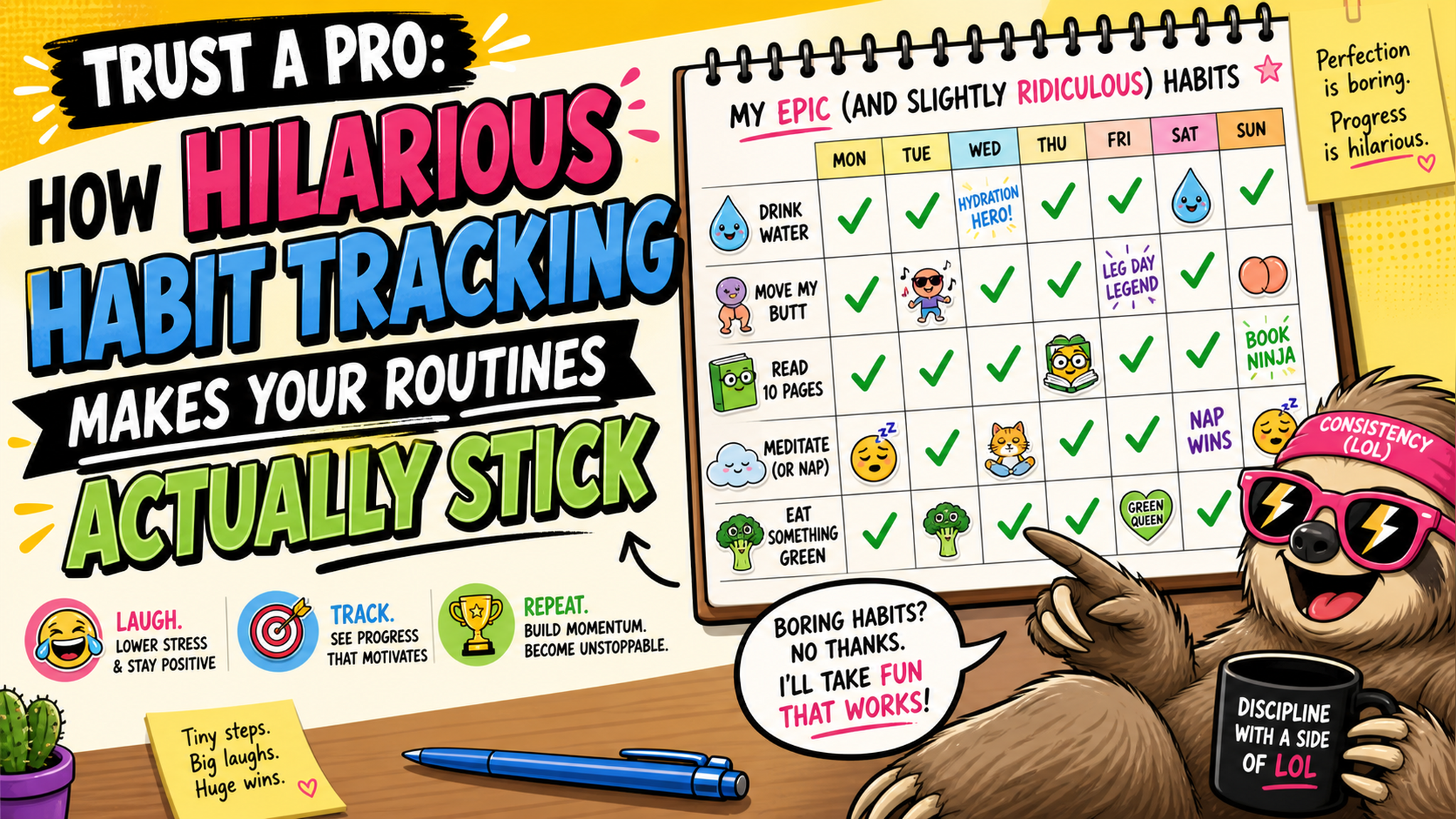
Why “serious” habit apps fail you
Most habit trackers are built like productivity tools for a CEO who never sleeps. They assume you’re a disciplined robot. But you’re not. You’re a person who forgets to drink water and scrolls TikTok when you should be sleeping. The moment you miss a day, the app punishes you with a broken streak, and your motivation dies. That’s where Habitly flips the script — it rewards you with humor instead of guilt.
Think of it like this: instead of a stern “You missed your run” notification, you get a sarcastic pop-up from a cartoon character calling you out in a friendly way. Absurd? Yes. Effective? Also yes.
Three real scenarios where the humor works
1. The “I’ll start Monday” trap
You tell yourself you’ll start exercising on Monday. By Thursday, you’ve already talked yourself out of it. Habitly’s streak reminders don’t lecture you — they send a meme-like alert saying “Your future self is laughing at you.” It’s cheeky enough to make you smirk and actually get off the couch. The tone lowers the resistance. You don’t feel judged; you feel roasted by a friend.
2. Tracking habits that aren’t even habits yet
Maybe you want to read more, but you only manage two pages before falling asleep. Serious apps would mark that as a failure. Habitly lets you log “partial wins” with a funny label — “I tried, okay?” That tiny allowance keeps you coming back. Over time, two pages become ten. The laughter removes the shame.
3. The accountability buddy who’s actually fun
Habitly lets you share your progress with friends inside the app, but the shared feed looks less like a progress report and more like a group chat roast session. One friend’s “meditation” entry might read “sat still for three minutes, only had one intrusive thought.” That kind of honesty turns tracking into social entertainment, not a chore.
Tradeoffs: is the humor always the right move?
Let’s be real — funny doesn’t always mean functional. If you’re someone who needs strict discipline and cold numbers, the playful tone might feel distracting. Habitly’s gamification is light, not hardcore. You won’t find detailed analytics or complex habit chaining. It’s built for consistency, not optimization. So if you’re trying to build a serious fitness regimen or a study schedule for a high-stakes exam, you might want to pair it with a more traditional tracker, or use Habitly as the emotional support sidekick.
Also, the humor can get repetitive after a few weeks. The app tries to rotate jokes, but if you use it daily for months, some one-liners will land flat. That’s okay — the goal isn’t to laugh every time; it’s to lower the barrier to reopen the app. Once you’re in, the streak itself becomes the real motivator.
Who should trust this “pro” approach?
If you’ve given up on habit apps because they feel like homework, Habitly is worth a shot. It’s especially good for young adults who thrive on shared culture, memes, and light-hearted accountability. Students, remote workers, and anyone building habits around health or creativity will appreciate the flexibility. But if you’re a die-hard stoic who hates any form of “cute”, this isn’t for you — and that’s fine.
At the end of the day, habit tracking is about showing up. If a ridiculous notification makes you show up, then it’s smarter than it looks. And honestly? Sometimes the best way to trick your brain into consistency is to make it laugh.
Comments
Leave a Comment