You know that feeling when you’ve got ten tabs open in your brain—work deadlines, gym goals, that course you swore you’d finish—and somehow nothing actually gets done? You’re not lazy. You’re just stuck in chaos mode. And most “productivity advice” out there reads like a robot wrote it: “Wake up at 5 AM, drink celery juice, journal for 20 minutes.” Yeah, that’s gonna last a whole two days.
That’s where Habitly Routines comes in. It’s not another habit tracker that guilt-trips you for missing a day. It’s a system that actually adapts to your real life—messy schedules, low-energy days, and all. Let me walk you through how it helps you go from scattered to chill, without making you hate the process.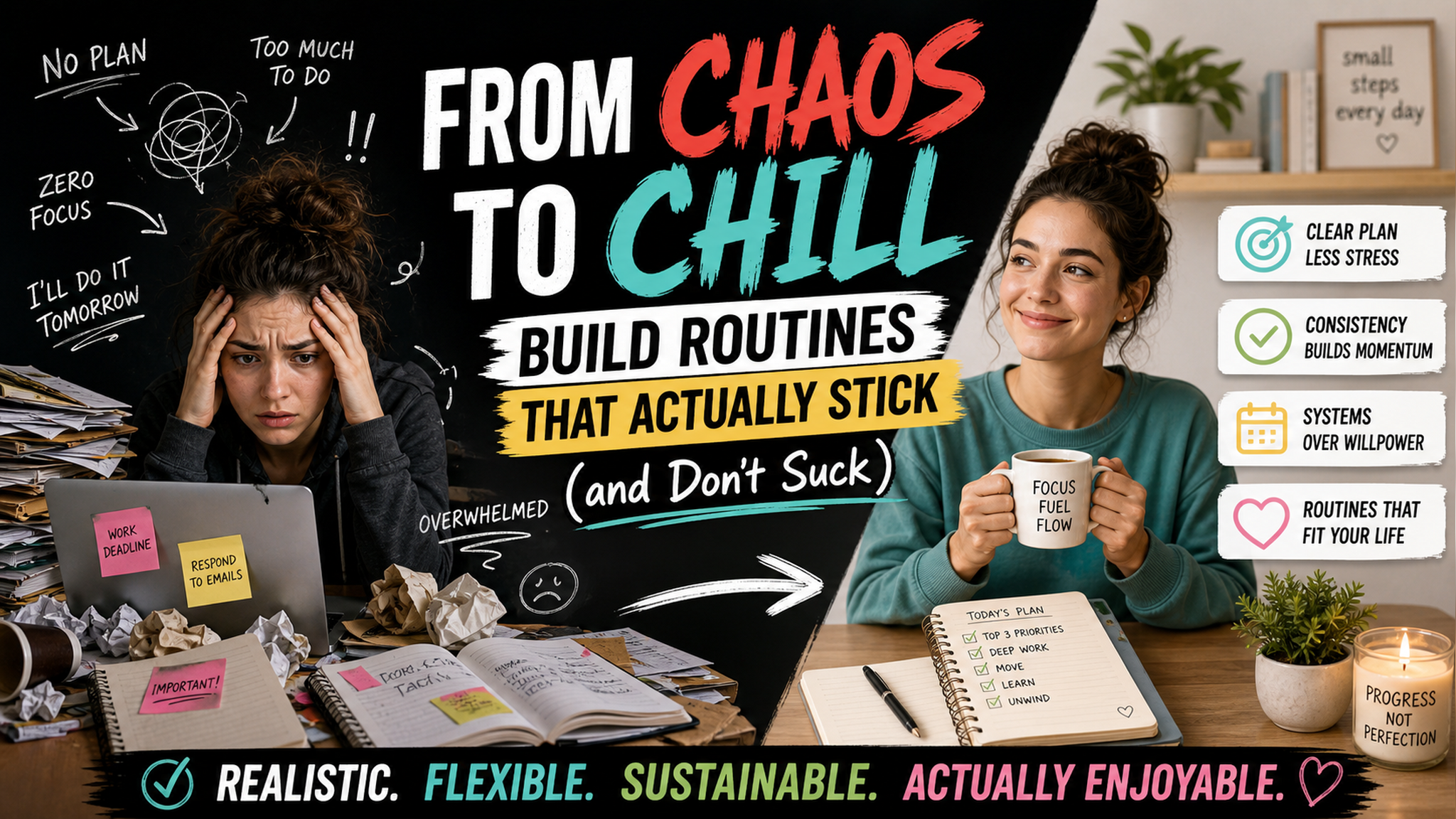
It’s Not About Willpower—It’s About Setup
Most people think building a routine means forcing yourself to do things you hate. That’s a recipe for quitting. Habitly flips it: you design tiny, dumb-simple actions that slide into your existing day. Habitly helps you build routines by starting with the smallest possible version of a habit. Want to read more? Not “read 30 pages.” Try “open the book and read one sentence.” That’s embarrassingly easy, so you actually do it. Then the streak kicks in, and that little dopamine hit keeps you coming back.
I tested this with “stretch for 2 minutes after waking up.” Before Habitly, I’d set a grand goal of daily yoga. Never happened. With the micro-routine, I’ve held a 30-day streak—and now I actually do 5–10 minutes most days. The app just nudges me at the right moment and tracks my consistency. No shame spirals when I miss.
Real Scenarios Where Habitly Actually Works
Scenario 1: The Chaos Student
You’ve got classes, night shifts, and a social life that’s anything but routine. Habitly lets you group habits into different times of day—morning, afternoon, evening—instead of fixed times. So “study for 20 mins” can happen at 2 PM or 10 PM, and it still counts. That flexibility is the difference between a dead app and one that sticks.
Scenario 2: The Exhausted Professional
After a 9-hour workday, your brain is fried. The last thing you want is a complex productivity ritual. Habitly’s “focus” mode helps you chain two tiny habits—like “drink water” then “close laptop for 5 mins.” It takes zero mental energy, and before you know it, you’re actually winding down instead of doom-scrolling.
Scenario 3: The Personal Growth Hacker
You want to meditate, journal, exercise, and eat better all at once. Habitly lets you create a balanced system: add habits for health, study, focus, and personal growth in separate categories. You can see which area you’re neglecting and adjust without overhauling everything. It’s like having a dashboard for your life, but without the corporate jargon.
The Tradeoffs You Need to Know
No tool is perfect. Habitly does a lot right, but here’s what might bug you:
- It rewards streaks, not perfection. If you miss a day, the streak resets. Some people find that demotivating. Others love the fresh start. I’m in the second camp—it pushes me to restart immediately instead of giving up for a week.
- The UI is clean but basic. You won’t find fancy charts or habit widgets for your home screen. If you’re a data nerd who wants hourly breakdowns, this isn’t it. But if you want something that just works without overcomplicating, it’s perfect.
- No social accountability built in. You can’t compete with friends or share streaks. For some, that’s a dealbreaker. I actually prefer it—less noise, more focus on my own consistency.
If you need heavy customization or habit stacking diagrams, you might look at apps like Habitica or Loop Habit Tracker. But if you want a system that feels more like a gentle coach than a drill sergeant, Habitly is the better fit.
So Should You Try It?
If you’ve tried “just discipline” and failed, it’s not your fault. The system was wrong. Habitly helps you build routines that don’t suck because they’re designed for real humans—people who sometimes stay up too late, forget things, and have good days and bad days.
Give it a week. Pick one tiny thing you already do (like brushing your teeth) and attach a new micro-habit to it. Let Habitly track the streak, ignore the pressure, and see if the chaos starts to chill out. Probably it will.
Comments
Leave a Comment